
Think about this: if someone collapsed near you right now, would you know what to do?
In most rooms, the honest answer is that not enough people would. And that’s exactly the problem.
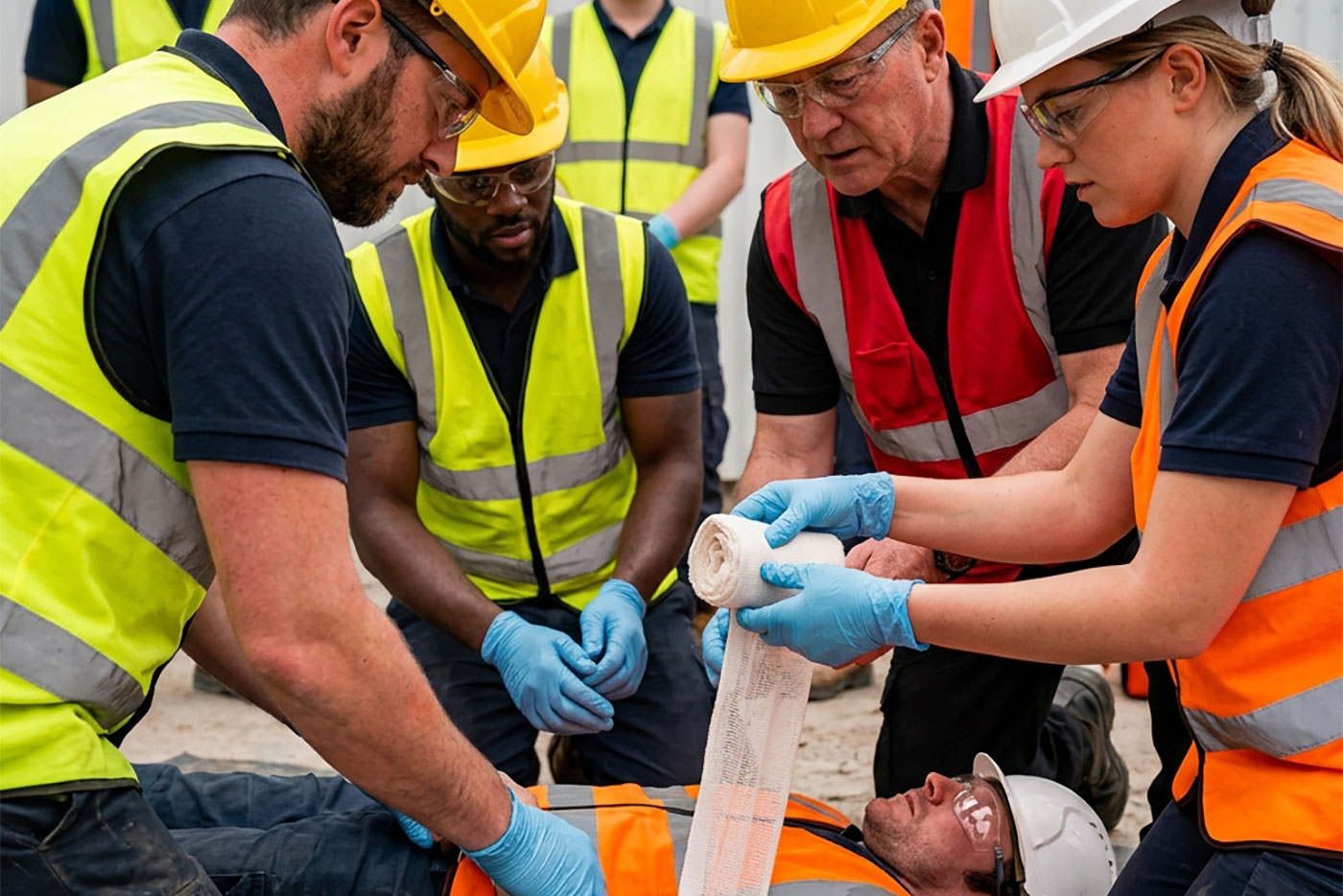
First Aid and CPR Training isn’t just for healthcare workers. It’s for parents, teachers, office staff, coaches, and anyone who shares space with other people. Because emergencies don’t wait for the right person to show up they happen wherever you are.
The Importance of First Aid Training
Most life-threatening emergencies happen outside hospitals in homes, workplaces, gyms, and schools. Canadian emergency response times average 6 to 12 minutes. A cardiac arrest causes irreversible brain damage within 4 to 6 minutes.
That gap is where first aid training saves lives.
A trained bystander who acts immediately keeps someone alive until paramedics arrive. Beyond that, first aid training helps people prevent situations from worsening, reduce recovery time, and create safer environments every single day not just in emergencies.
Benefits of CPR Certification
CPR is the skill that literally keeps someone alive when their heart has stopped. The benefits of CPR certification are clear:
- You act instead of freeze. Training removes the uncertainty that stops most bystanders from helping.
- Survival rates double. Bystander CPR more than doubles survival odds for cardiac arrest. With early AED use, survival can exceed 70% versus below 10% with no intervention.
- It carries professional weight. Employers in healthcare, education, fitness, and construction actively seek or require CPR-certified staff.
- It builds lasting confidence. Knowing you could save a life changes how you respond to all high-pressure situations not just medical ones.
When to Use CPR
Use CPR when a person is unresponsive and not breathing normally (no breaths, or only gasping).
Here’s what to do:
- Call 911 or point to someone specific and tell them to call
- Send someone to find the nearest AED
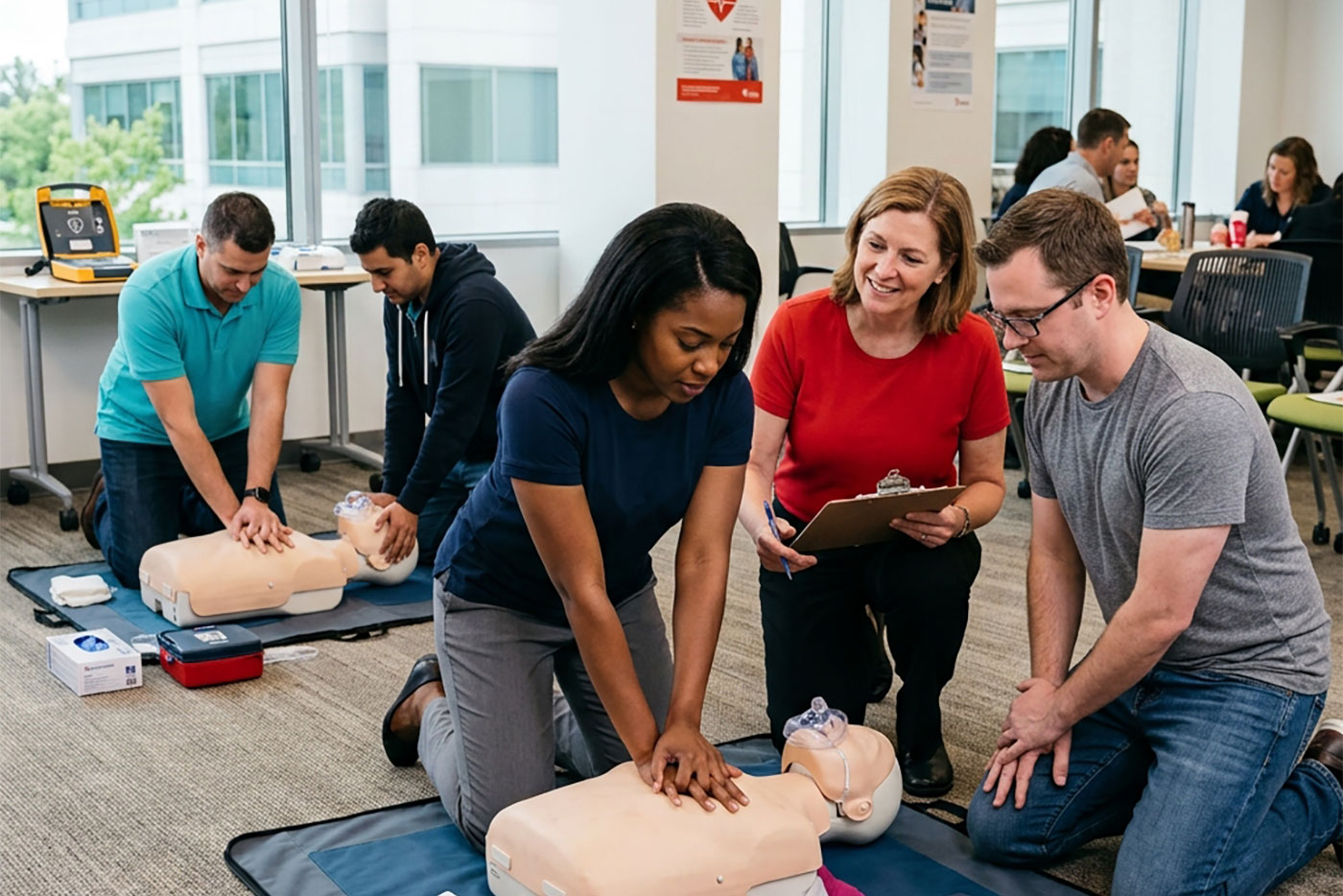
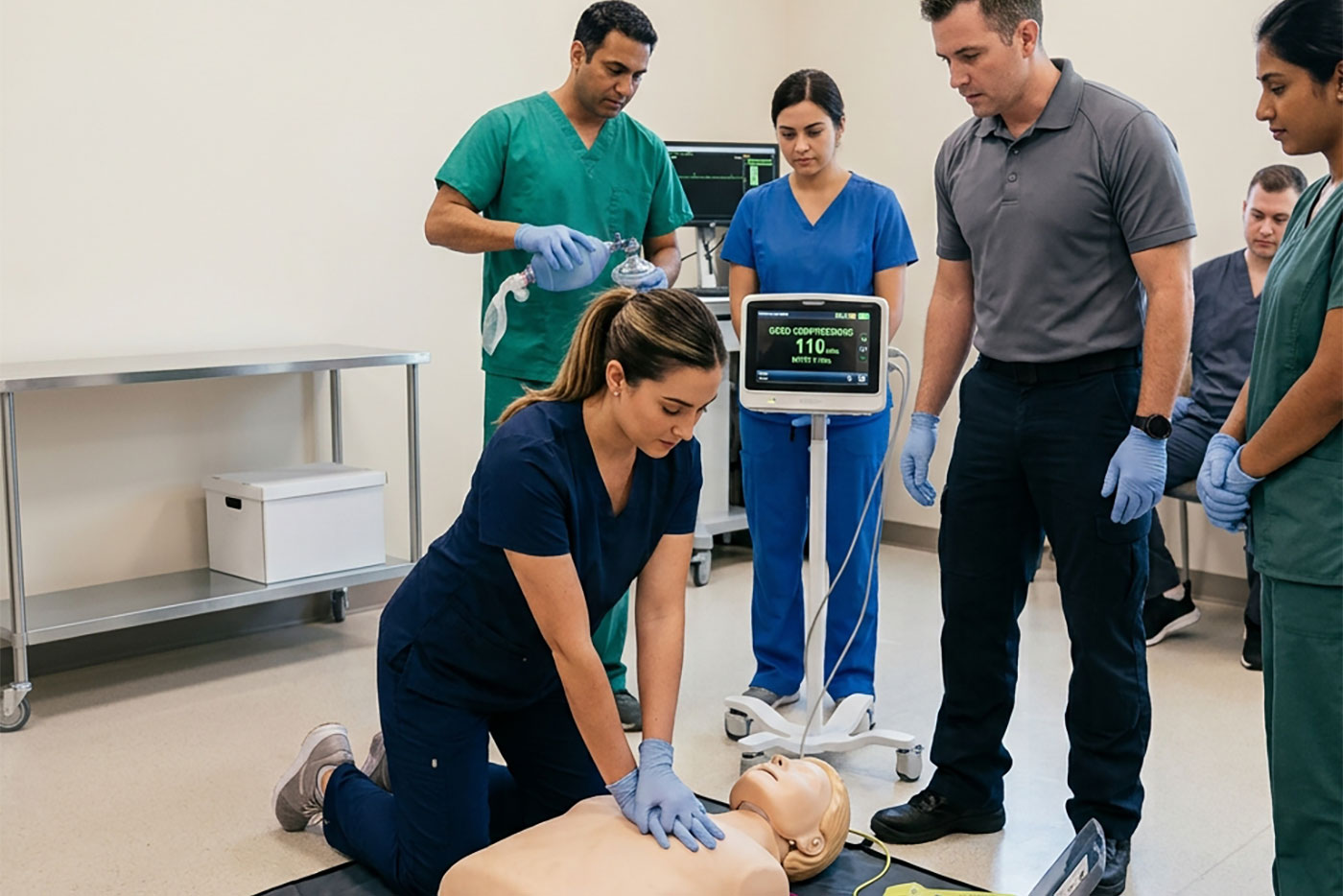
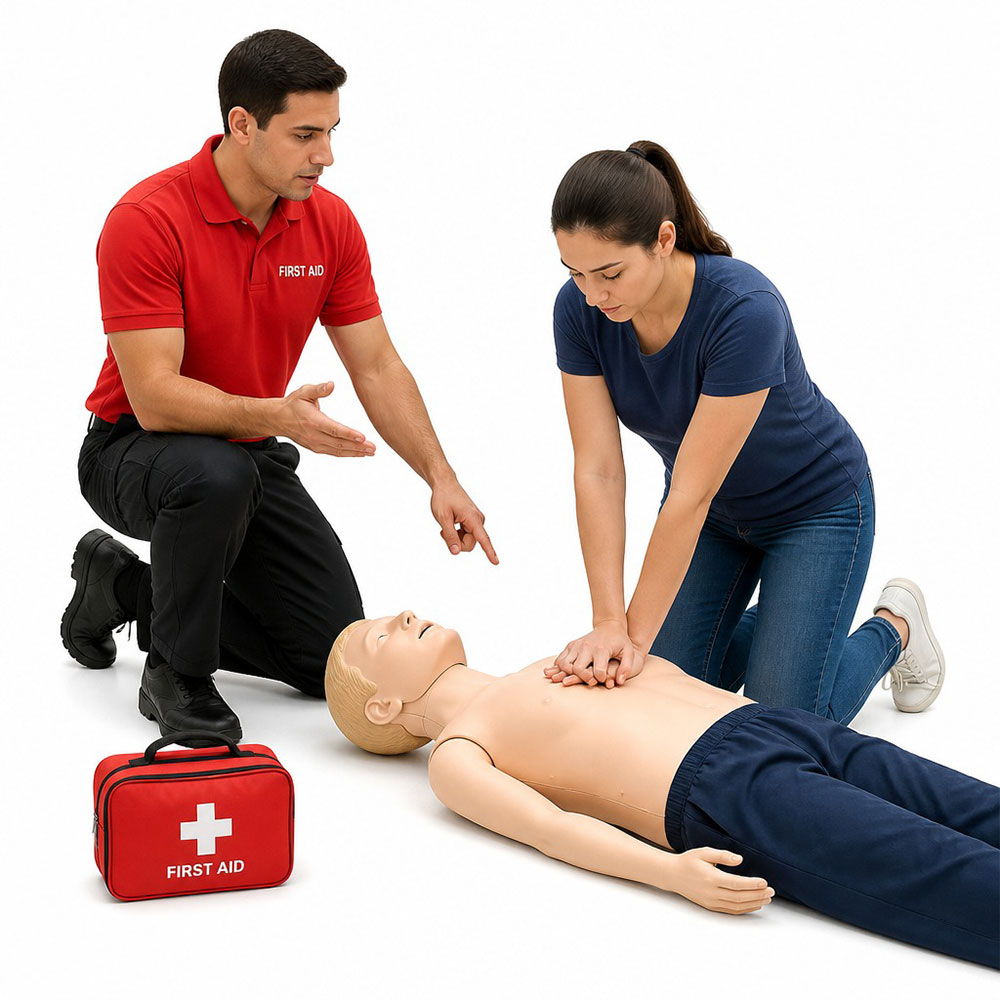
- Begin chest compressions hard and fast, 100–120 per minute, at the center of the chest
- Give 2 rescue breaths after every 30 compressions (if trained)
- Keep going until the AED arrives, help takes over, or the person recovers
Do not use CPR if the person is conscious, breathing normally, or has a known DNR in place.
When in doubt, act. The risk of doing nothing is always greater.
Why Everyone Needs First Aid Knowledge
First aid training isn’t for a specific type of person. Here’s why it’s for everyone:
- Emergencies are unpredictable. Cardiac arrests, choking, allergic reactions — they happen anywhere, to anyone, at any time.
- It’s usually someone you know. Most cardiac arrests happen at home, near family. The person who may need your help isn’t a stranger.
- Responders can’t always get there in time. In those critical first minutes, a trained bystander is often the only thing standing between life and death.
- Children are especially at risk. Choking, accidents, and allergic reactions are disproportionately common among kids. If you care for children, being trained isn’t optional — it’s responsible.
- It takes just one or two days. That’s all it takes to gain skills you’ll carry for life — and that could one day save one.
Get Certified with Canadian HSE
Canadian HSE offers nationally recognized First Aid and CPR certification courses across Ontario and Canada, taught by certified instructors and built to meet workplace safety requirements.
Courses available include Emergency First Aid, Standard First Aid, Basic Life Support (BLS), CPR & AED, and group corporate training options.
Visit canadianhse.ca to find a course near you.
Be the Person Who Knows What to Do
Emergencies move fast. They don’t give you time to Google, hesitate, or hope someone more qualified shows up.
First Aid and CPR Training gives you the knowledge, confidence, and skills to act — and acting is what saves lives.