
Most people know they should have some form of emergency training. Fewer people actually get it, and of those who do, many aren’t entirely sure whether they took the right course for their role, their workplace, or their personal situation. First Aid and Basic Life Support (BLS) are both critical, both potentially life-saving, and both widely misunderstood in terms of what they cover, who they’re for, and what getting certified actually involves.
This guide covers everything you need to know: requirements, curriculum, learning objectives, key differences, and how to find a provider you can trust.
What Are First Aid Training and BLS Certification?
Before diving into the details, it helps to frame each certification clearly.
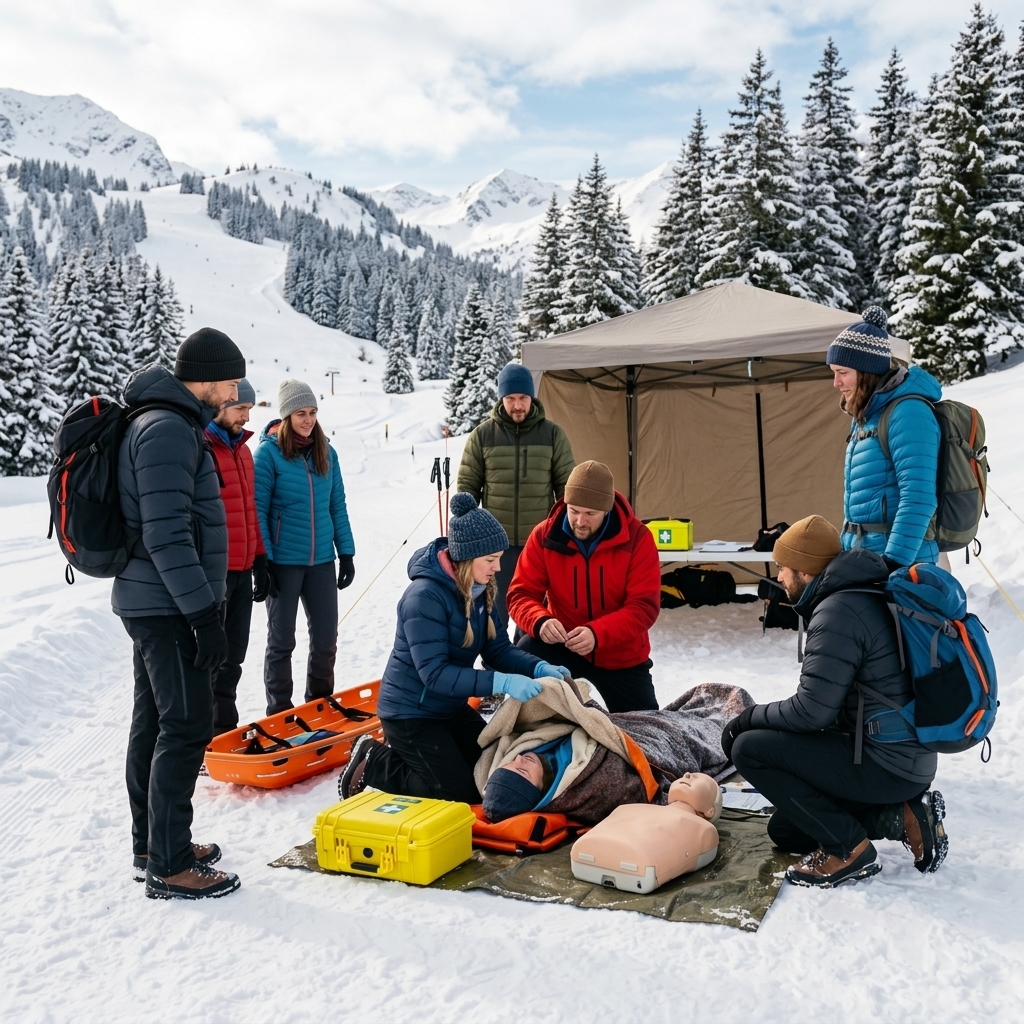
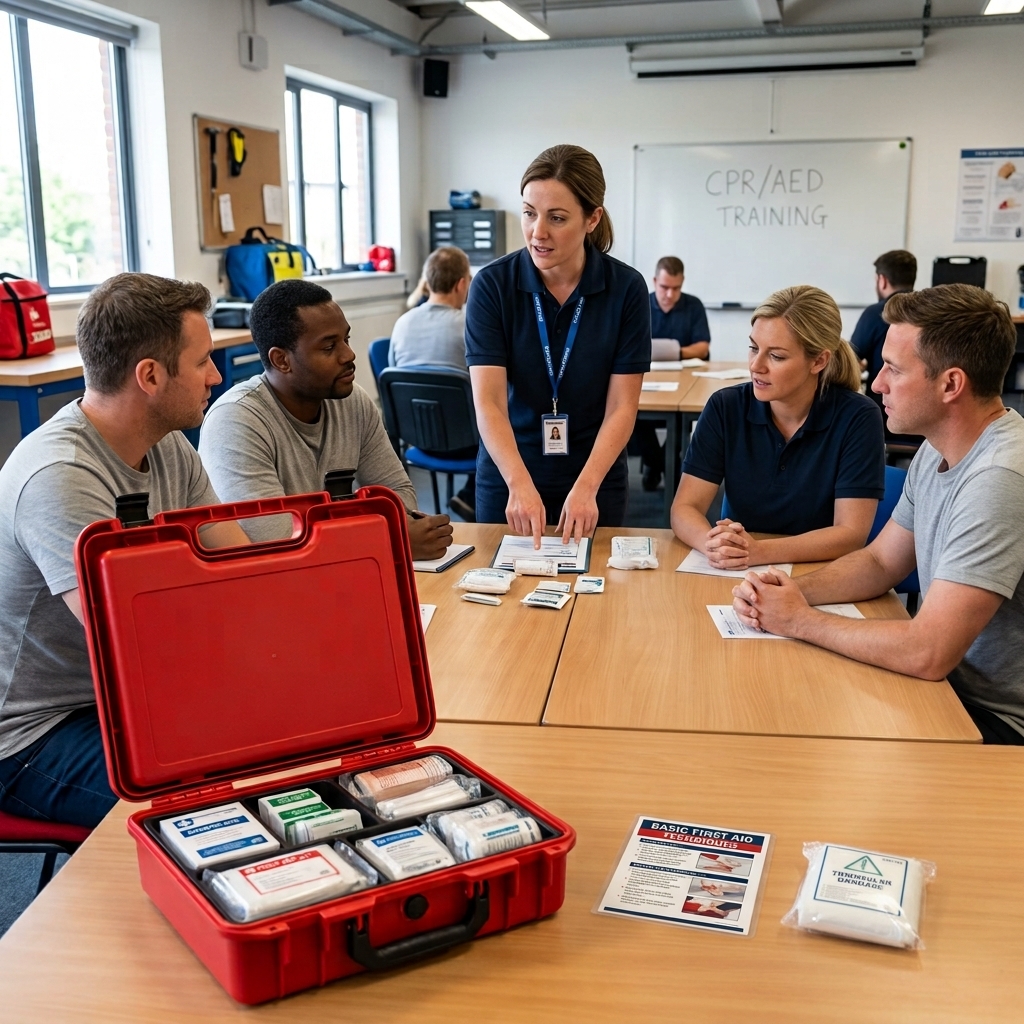
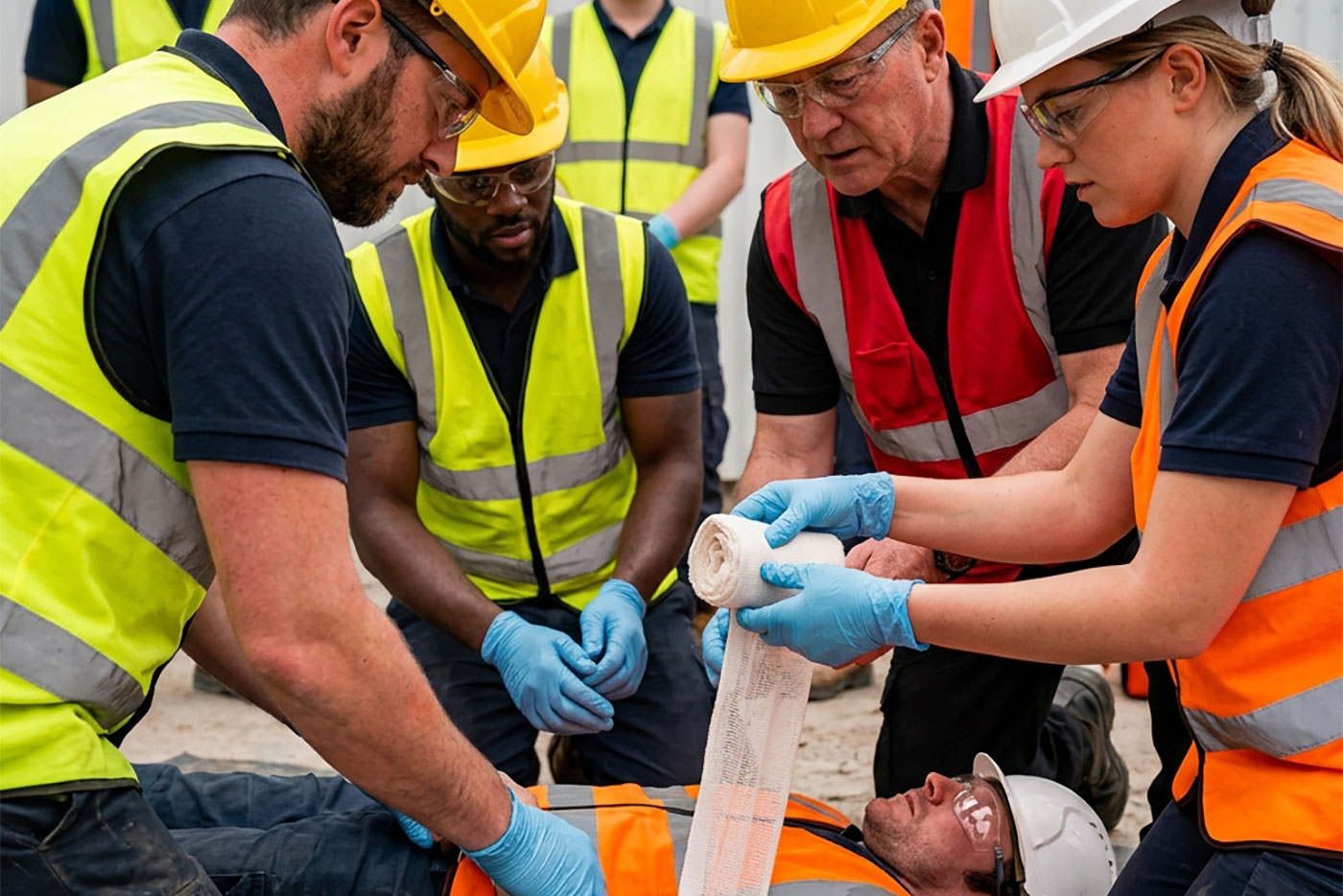
First Aid Training is a broad-based emergency response program designed for the general public. It equips everyday people, parents, teachers, construction workers, office employees, and coaches with the skills to recognize and respond to a wide range of medical emergencies until professional help takes over.
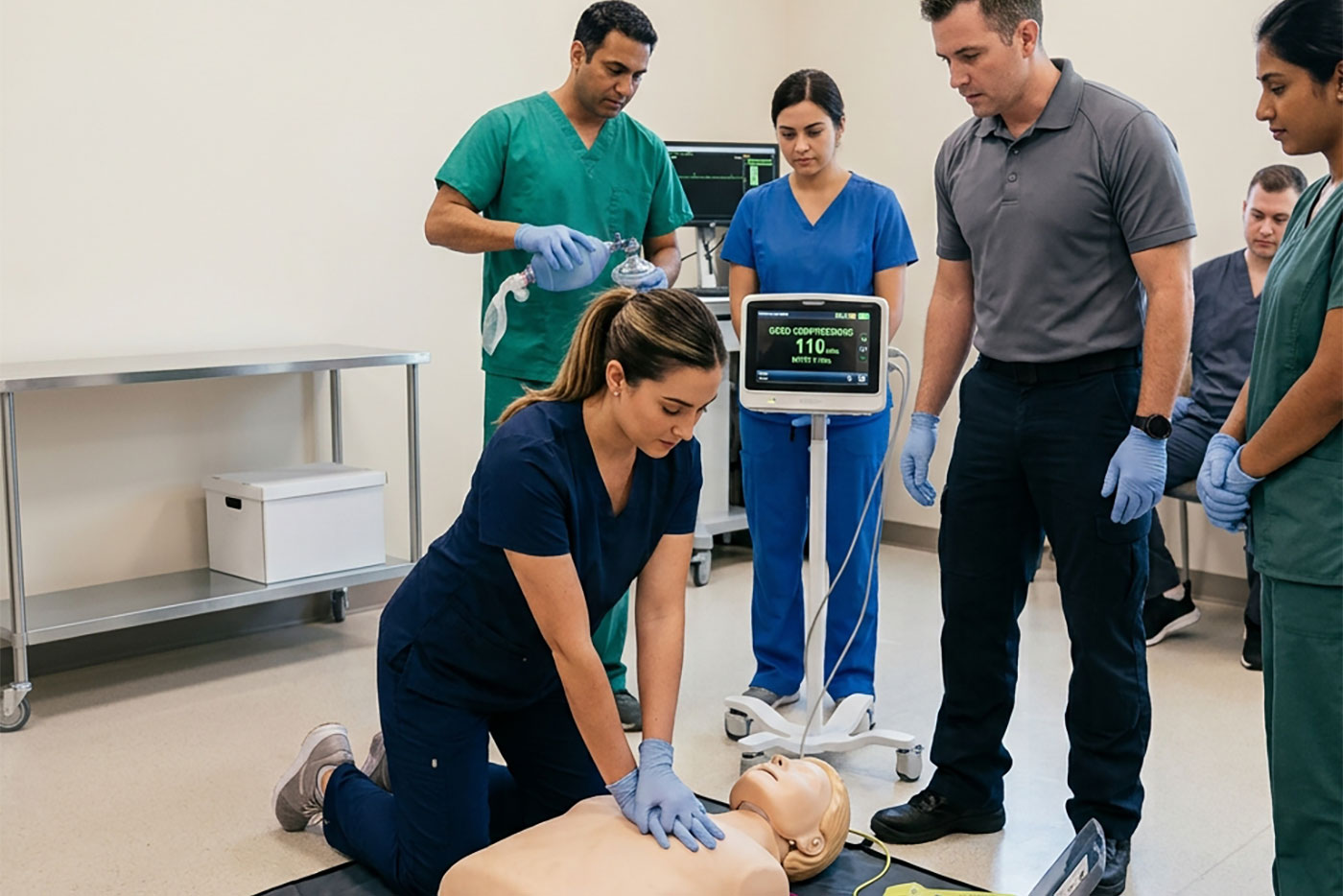
Basic Life Support (BLS) is a more specialized certification focused specifically on cardiac and respiratory emergencies. It’s designed primarily for healthcare professionals and trained emergency responders who need a higher level of clinical competency in resuscitation techniques.
Both include CPR and AED training. Both save lives. But they serve different audiences in different settings — and understanding that distinction is the foundation of everything else in this guide.
First Aid Training and BLS Certification: Requirements and Curriculum 2026
First Aid Certification Requirements
First Aid certification requirements vary by province and industry, but across Canada in 2026, most employers and regulatory bodies require:
- At least one certified first aider per shift, per location
- Certification level matched to workplace hazard rating (basic, standard, or advanced)
- Valid certification renewed every three years
- Courses delivered by a recognized, accredited training organization
Typical First Aid course curriculum includes:
- Scene safety assessment and emergency calling procedures
- Adult, child, and infant CPR with AED use
- Choking and airway obstruction response
- Wound care, bleeding control, and shock management
- Burn treatment and fracture/sprain response
- Recognition and response to seizures, strokes, and severe allergic reactions
- Diabetic emergencies and heat/cold-related illness
BLS Certification Requirements
BLS certification in 2026 is required for most healthcare professionals including nurses, physicians, paramedics, dental staff, and allied health workers. Requirements typically include:
- Renewal every 1 to 2 years to stay aligned with updated resuscitation guidelines
- Demonstrated physical skill competency — not just theoretical knowledge
- Certification aligned with Heart and Stroke Foundation or American Heart Association standards
- In-person evaluation by a qualified instructor
Typical BLS course curriculum includes:
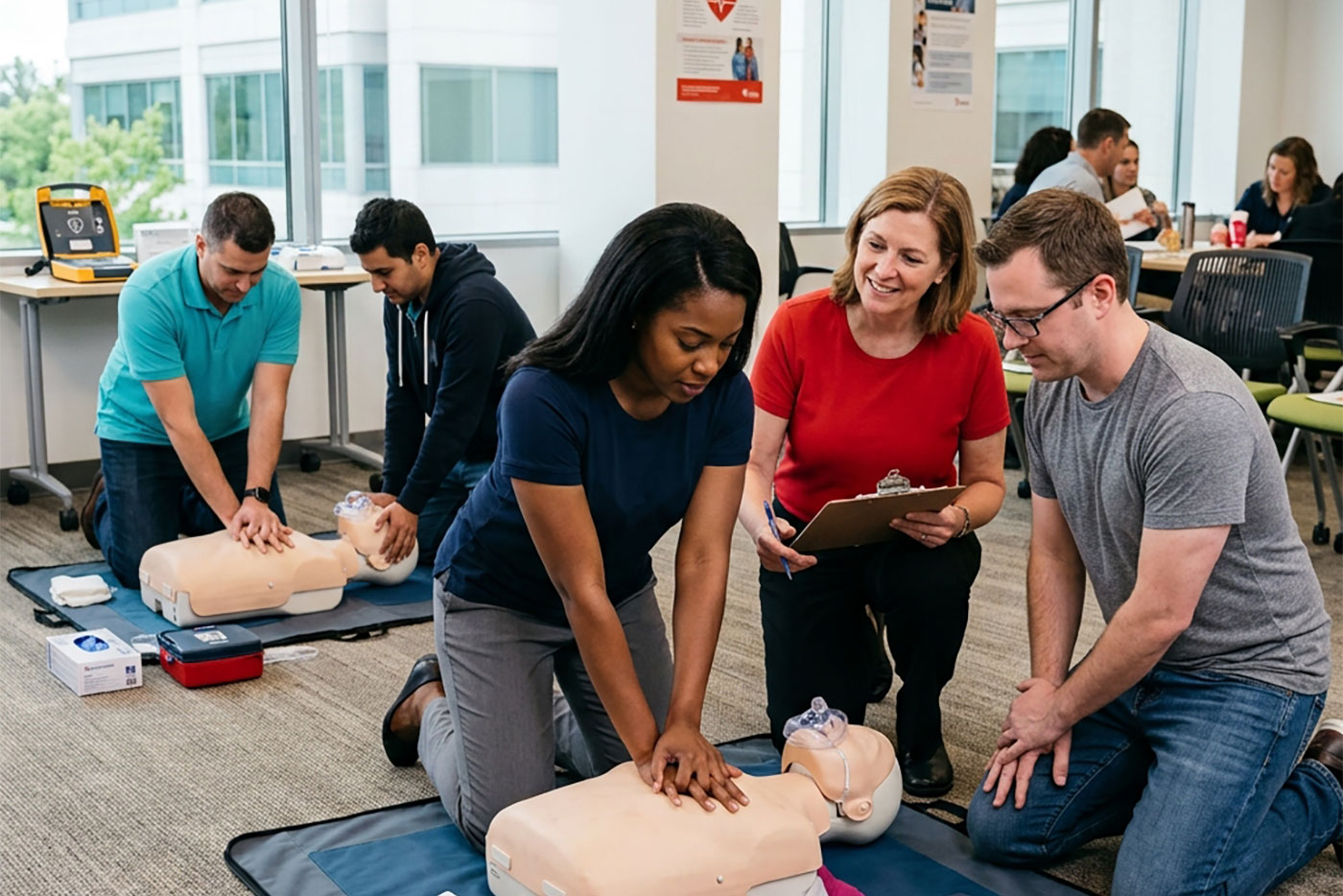
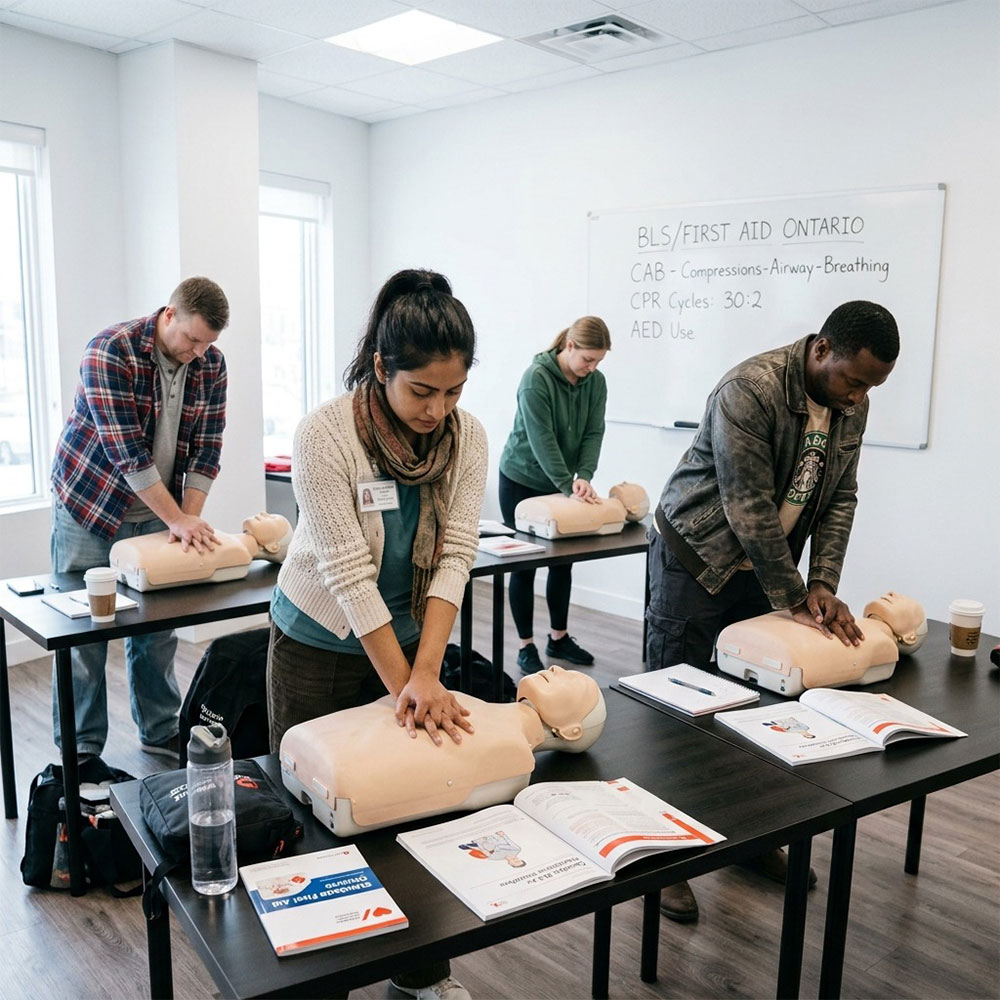
- High-quality CPR for adults, children, and infants — with emphasis on compression rate, depth, and recoil
- Two-rescuer CPR and team-based resuscitation coordination
- Bag-valve mask ventilation and advanced airway management basics
- AED integration within a coordinated resuscitation sequence
- Recognition of cardiac arrest rhythms and post-resuscitation care fundamentals
- Effective communication during multi-rescuer emergency response
Basic Life Support and First Aid: Course Overview and Learning Objectives
Understanding the learning objectives behind each course helps you gauge what you’ll actually walk away with.
First Aid Course Learning Objectives
By the end of a standard First Aid course, participants should be able to:
- Recognize life-threatening emergencies quickly and calmly
- Call emergency services and communicate effectively under pressure
- Perform CPR and use an AED on adults, children, and infants
- Control severe bleeding and manage wounds without causing further harm
- Respond appropriately to choking, shock, burns, fractures, and medical episodes
- Maintain composure and scene safety until professional responders arrive
BLS Course Learning Objectives
By the end of a BLS course, participants should be able to:
- Deliver chest compressions at clinically correct depth and rate consistently
- Coordinate seamlessly with other rescuers during multi-person resuscitation
- Operate a bag-valve mask and manage airways in a clinical setting
- Integrate CPR and AED use without unnecessary interruption to compressions
- Adapt resuscitation technique for adult, pediatric, and infant patients
- Apply current evidence-based resuscitation guidelines with confidence
BLS Certification vs. First Aid Training: Differences and Benefits
This is the question most people are really asking when they start researching emergency training. Here’s a clear, honest comparison:
Feature | First Aid Training | BLS Certification |
|---|---|---|
Primary Audience | General public, workplace staff | Healthcare professionals, clinicians |
Scope | Broad — multiple emergency types | Narrow — cardiac/respiratory focus |
CPR Depth | Foundational and practical | Advanced, technique-precise |
AED Training | Included | Included with deeper integration |
Certification Validity | 3 years | 1–2 years |
Setting | Community, workplace | Clinical, hospital, emergency unit |
Multi-rescuer Training | Occasionally included | Core component of the course |
Accepted by Employers | Most industries, WSIB-compliant | Healthcare employers, licensing bodies |
Key Benefits of First Aid Training
- Prepares everyday people for real-world emergencies
- Meets provincial workplace safety compliance requirements
- Builds community-wide emergency response capacity
- Covers the widest range of medical situations
Key Benefits of BLS Certification
- Meets the standard required by healthcare employers and licensing bodies
- Builds clinical-grade resuscitation technique through intensive practice
- Keeps healthcare professionals current with evolving guidelines
- Supports coordinated team response in hospital and clinical settings
The short answer: if you work in or are studying for a healthcare role, BLS is what you need. If you’re looking for workplace compliance or community readiness, First Aid is the right fit — and the two aren’t mutually exclusive. Many healthcare workers hold both.
How to Choose a First Aid and BLS Training Provider
Not all providers are equal, and the wrong choice can mean a certificate that isn’t accepted or training that doesn’t build real skill. Here’s what to look for:
- Verify Accreditation First
Your provider should be accredited by a nationally recognized organization — Canadian Red Cross, Heart and Stroke Foundation, St. John Ambulance, or Lifesaving Society. If the accreditation isn’t clearly stated, ask directly. This is non-negotiable.
- Require an In-Person Skills Component
Any course that doesn’t include hands-on manikin practice and instructor-evaluated skills is not a complete certification. Online theory is fine as preparation — but CPR and AED competency must be demonstrated in person.
- Check Instructor Credentials
Look for instructors with:
- Current instructor-level certification from a recognized body
- Relevant clinical or emergency response experience
- A demonstrated ability to correct technique, not just demonstrate it
- Ask About Class Size
Smaller classes mean more manikin time and better individual feedback. For skills-based courses, a participant-to-instructor ratio above 10:1 should raise questions.
- Consider Flexibility and Recertification Support
Look for providers that offer:
- Weekday, evening, and weekend sessions
- On-site group training options for employers
- Renewal reminders and streamlined recertification booking
- Read Course Reviews
Genuine reviews from past participants reveal a lot about instructor quality, facility condition, scheduling reliability, and whether the training actually felt useful. Look beyond the star rating read what people say about the hands-on component specifically.
First Aid training and BLS certification are both investments that pay off when it matters most — which is a moment you can never predict or schedule. Whether you’re an employer ticking a compliance box, a nurse renewing before a deadline, or a parent who simply wants to be ready, choosing the right course and the right provider is what separates genuine preparedness from a laminated card collecting dust in a wallet.
Canadian HSE offers accredited First Aid and BLS courses designed to meet 2026 provincial standards with experienced instructors, flexible scheduling, and both individual and group training options. Get certified right — and be ready when it counts. EOF