
If you work in healthcare in Ontario as a nurse, physician, paramedic, dental professional, or allied health worker, BLS certification is not a credential you can treat casually. It is a baseline professional requirement, a clinical safety standard, and in many cases, a non-negotiable condition of academic placement and hospital credentialing. Yet despite BLS Training being a staple across Ontario’s healthcare sector, many professionals still are not entirely clear on what it entails, when it expires, or how to renew it efficiently. This guide covers everything you need to know in 2026.
What Is BLS Certification?
Basic Life Support (BLS) is a clinical certification that trains healthcare providers to recognize and respond to cardiac and respiratory arrest with high-quality, technique-precise resuscitation skills. Unlike general First Aid designed for the public BLS Training is built specifically for individuals working in clinical environments where cardiac emergencies are a realistic and recurring possibility.
A BLS course in Ontario covers:
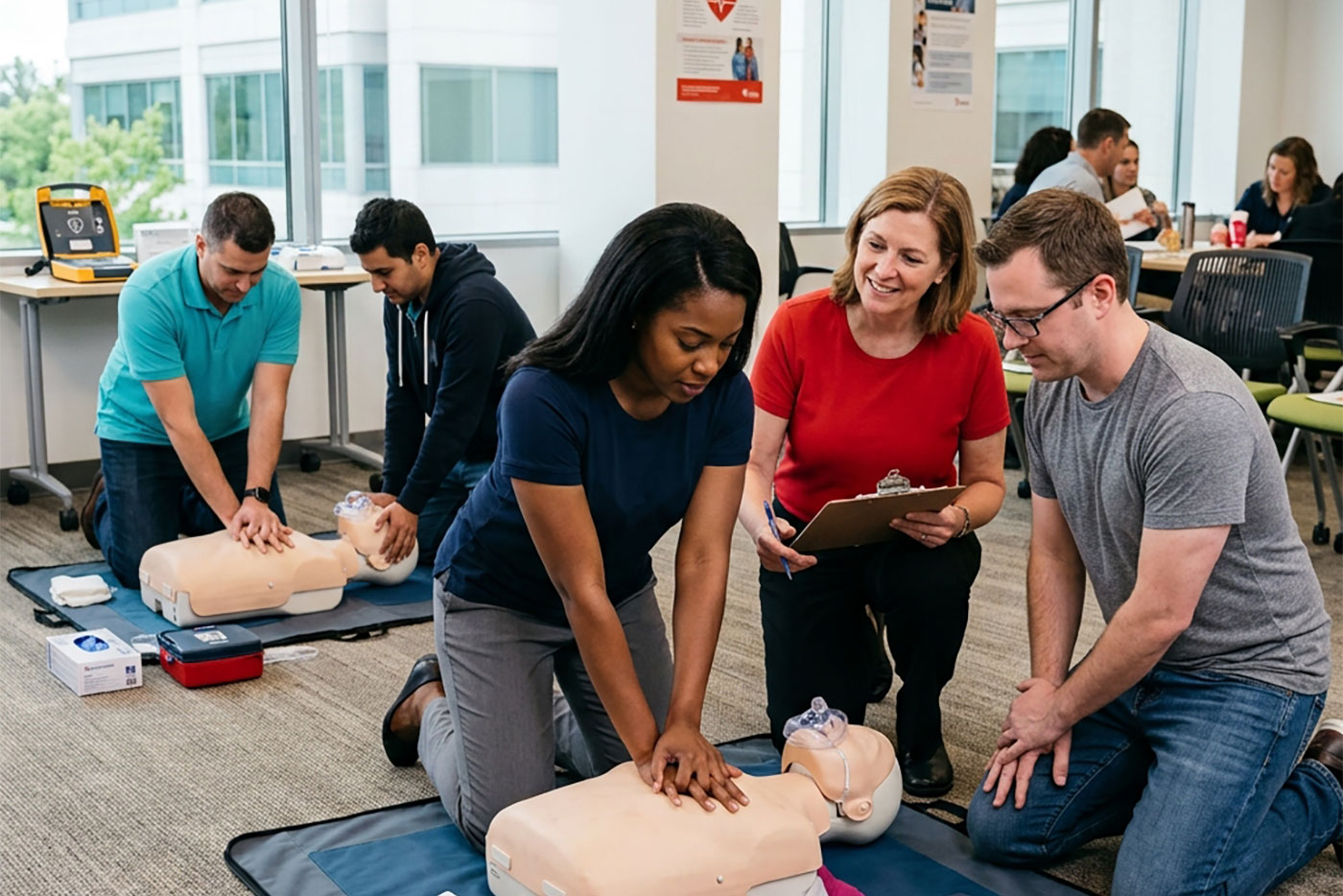
- High-quality CPR for adults, children, and infants with strict standards for compression rate (100–120 per minute), depth (minimum 5cm for adults), full chest recoil, and minimal interruptions
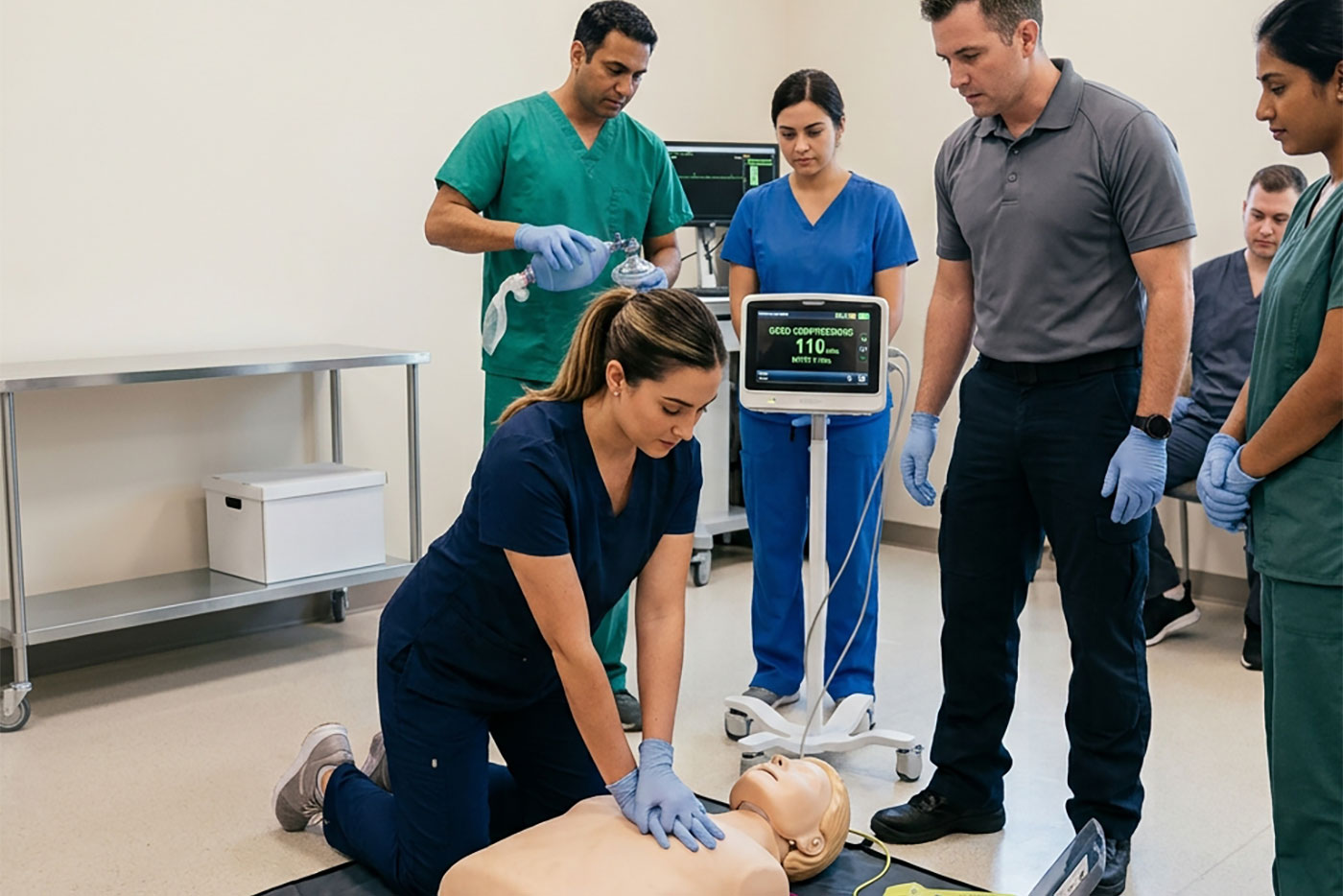
- Two-rescuer CPR: coordinating with a second responder to maintain continuous, effective compressions
- Bag-valve mask (BVM) ventilation delivering rescue breaths with proper mask seal and technique
- AED operation deploying a defibrillator as part of a fluid, uninterrupted resuscitation sequence
- Airway management identifying and relieving obstructions in adult, pediatric, and infant patients
- Team communication clear role assignment and real-time coordination between rescuers
The clinical precision required goes significantly beyond general First Aid; compression depth, rate, recoil, and ventilation ratios are evaluated against measurable standards.
Who Requires BLS Certification in Ontario?
BLS certification is required across a wide range of healthcare roles in Ontario, including:
- Registered Nurses (RNs) and Registered Practical Nurses (RPNs)
- Physicians and Residents
- Paramedics and Emergency Medical Technicians
- Dental professionals: dentists, hygienists, and dental assistants
- Respiratory Therapists and Physiotherapists
- Personal Support Workers (PSWs) in long-term and home care settings
- Medical and Nursing Students before clinical placement begins
Requirements for Ontario healthcare professionals in 2026:
- Certification must come from a recognized provider. Heart and Stroke Foundation (HSFC) or American Heart Association (AHA) are most widely accepted
- In-person skills evaluation is mandatory; no BLS certification can be issued through an online-only format
- Renewal is required every two years, aligned with updated resuscitation guidelines
- Employer verification: many Ontario hospitals maintain internal certification records and flag expired credentials during credentialing reviews
BLS Certification Cost and Renewal in Ontario
BLS course pricing in Ontario varies by provider, format, and whether training is arranged individually or through an employer group booking. Many Ontario hospitals and healthcare employers cover or subsidize costs for active clinical staff. Confirm your employer’s reimbursement policy before paying out of pocket.
The BLS renewal process typically looks like this:
- Track your expiry date. BLS certification is valid for two years; set a reminder at least 60 days before expiry
- Choose an accredited provider– HSFC- or AHA-aligned training centers recognized by your employer or licensing body
- Complete the renewal course; recertification is typically 3 to 4 hours, focusing on skill refresher and updated guideline review
- Complete mandatory in-person skills evaluation; physical demonstration of CPR, BVM, and AED competency remains required
- Submit updated certification; many Ontario hospitals require proof of renewal filed with HR or credentialing departments within a specified timeframe
Critical note: Allowing your BLS certification to lapse even briefly can affect clinical placement, hospital privileges, and professional standing. Book renewal well before expiry, never after.
BLS vs. ACLS vs. PALS: Ontario Healthcare Training Comparison
Certification | Who It Is For | Focus | Validity |
|---|---|---|---|
BLS | All healthcare providers | CPR, AED, airway basics, team CPR | 2 years |
ACLS | Physicians, RNs, paramedics, advanced providers | Cardiac rhythms, pharmacology, advanced airway | 2 years |
PALS | Pediatric nurses, pediatric physicians, emergency staff | Pediatric cardiac arrest, respiratory failure, shock | 2 years |
BLS is the essential foundation — ACLS and PALS build upon it for advanced clinical roles.
Choosing the Right BLS Training Provider in Ontario
When selecting a BLS course in Ontario, look for:
- Recognized accreditation: Heart and Stroke Foundation or American Heart Association
- Mandatory in-person skills sessions no fully online certification shortcuts
- Experienced instructors with current clinical backgrounds
- Flexible scheduling: evening, weekend, and weekday options
- Group training capability on-site options for hospitals and healthcare teams
- Streamlined renewal system with reminder notifications and documented records
Get BLS Certified With Confidence
BLS certification in Ontario is more than a checkbox. It is the skill set every healthcare professional reaches for when a patient needs it most, and the standard your employer, licensing body, and patients expect you to consistently maintain.
Canadian HSE offers accredited BLS Training and recertification courses across Ontario, aligned with current 2026 resuscitation guidelines and designed specifically for healthcare professionals. With experienced clinical instructors, flexible scheduling, and group training options for healthcare teams, Canadian HSE makes it straightforward to get certified, stay current, and practice with genuine confidence