
Ask ten employers whether Ontario law requires them to have an AED on-site, and you’ll likely get ten different answers. That confusion isn’t accidental; Ontario’s AED legislation has been evolving in pieces, with some industries facing firm mandates while most others operate under recommendations rather than requirements. This gap between what employers assume and what the law actually says is exactly where compliance risk hides. Understanding AED workplace requirements Ontario businesses face today can save you from a costly assumption.
Does Ontario Law Require Workplaces to Have an AED?
The short answer: it depends entirely on your industry. In 2020, Ontario passed Bill 141, the Defibrillator Registration and Public Access Act, which would require AEDs at general workplaces province-wide. However, the necessary implementing regulations still haven’t been published, meaning the law technically exists but isn’t yet enforceable for most businesses. For general workplaces outside specific mandated industries, AEDs currently remain a strong recommendation rather than a strict legal requirement, though that could change once regulations are finalized.
Industries Where AEDs Are Recommended or Mandated
While general workplace requirements remain pending, specific sectors already face firm obligations:
- Construction sites: under the Working for Workers Seven Act, as of May 23, 2025, Ontario construction projects expected to last three months or longer and employing 20 or more workers are legally required to have AEDs on-site.
- Schools and childcare facilities: many educational institutions have moved toward mandated AED placement, particularly following recent provincial safety initiatives.
- High-traffic public and recreational facilities: arenas, community centers, and fitness facilities are widely encouraged, and in some municipalities required, to maintain accessible AEDs.
- General offices and workplaces: currently recommended rather than mandated, pending Bill 141’s regulations.
AED Placement, Signage, and Maintenance Basics
Simply owning an AED isn’t enough, proper placement and upkeep matter just as much. Best practice guidance points to a “3-minute rule”: an AED should ideally be accessible and ready for use within three minutes of a cardiac arrest occurring anywhere on the premises. This generally means:
- Central, clearly marked locations, such as near reception areas, break rooms, or stairwells.
- Visible signage directing staff and visitors to the nearest device.
- Regular maintenance checks, including battery and pad expiry dates, following manufacturer guidelines.
- Registration with local emergency services, where available, so 911 dispatchers can direct callers to the nearest device.
Training Requirements for Staff Once an AED Is Installed
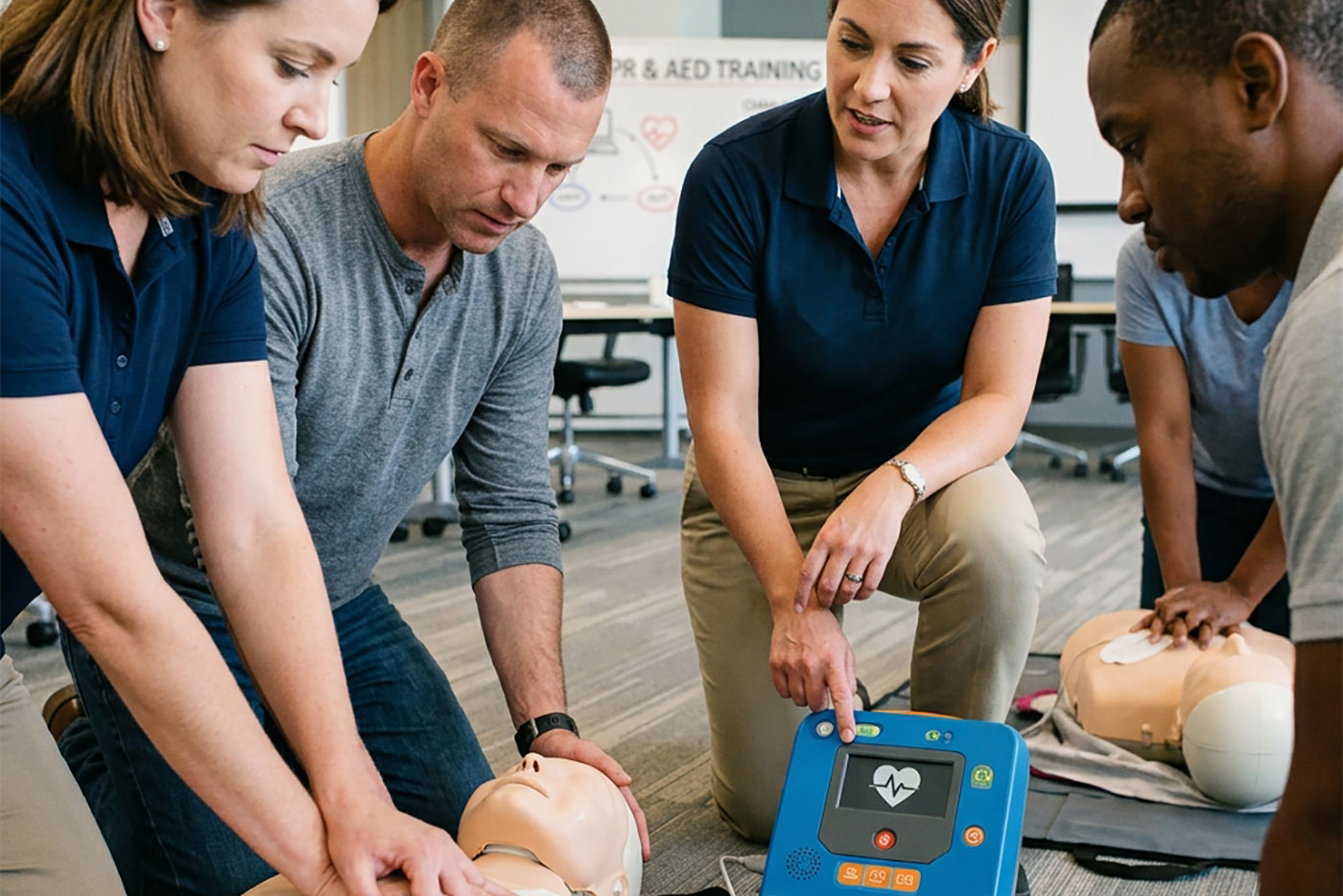
Installing an AED is only half the equation, staff need to know how to use it. Once a device is on-site, best practice (and in mandated sectors, often a compliance expectation) includes ensuring a sufficient number of employees hold current CPR/AED certification. This typically means combining AED training with broader first aid certification under WSIB-approved programs, rather than treating AED use as a standalone skill.
What Happens If Staff Aren’t Trained to Use It
An AED sitting untouched in a hallway doesn’t save lives, trained hands do. Below is a simplified look at how quickly readiness typically narrows once you move from having a device on-site to actually being prepared to use it effectively:
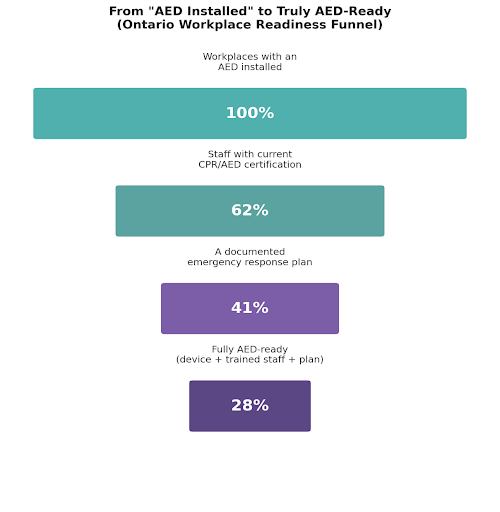
Beyond the safety risk, employers in mandated sectors who fail to provide adequate AED training may also face compliance gaps during inspections. The Chase McEachern Act (Heart Defibrillator Civil Liability), 2007 offers liability protection to those who use an AED in good faith during an emergency, but that protection encourages confident action, not a lack of preparedness. You can review the Act’s details via the Ontario government’s Chase McEachern Act information.
Closing the Compliance Gap
Whether your workplace falls under a current mandate or is simply preparing ahead of Bill 141’s eventual regulations, the safest approach is the same: install the equipment, place it thoughtfully, and make sure your team is genuinely trained to use it under pressure, not just aware it exists. Canadian HSE, based in Kitchener, offers group and corporate AED and CPR training designed to help Ontario workplaces meet both current requirements and best-practice standards, with flexible scheduling for teams of any size.
Ready to get your workplace AED-ready? Book group or corporate AED and CPR training with Canadian HSE in Kitchener today, or contact us to discuss the right training plan for your team.