
Most employers know they need a first aid kit somewhere on-site, but far fewer know exactly what has to be in it, or that the “right” kit actually depends on how many workers are on a given shift. Understanding first aid kit requirements Ontario law sets out isn’t just about ticking a box, it’s about making sure that kit is actually useful, and compliant, the day someone needs it.
Where These Requirements Come From
Every rule in this guide traces back to Regulation 1101 under Ontario’s Workplace Safety and Insurance Act, administered by the WSIB. Since January 1, 2020, employers have had a choice: meet Regulation 1101’s original prescriptive requirements, or supply an equivalent kit certified to the CSA Z1220-17 national standard. Both routes satisfy the law, but many employers find the traditional Regulation 1101 structure easier to audit against.
Ontario Workplace First Aid Kit Checklist
Here’s a practical Ontario workplace first aid kit checklist to work through for your business:
- Determine your workers per shift, not your total headcount, since this single number determines which kit tier applies to you.
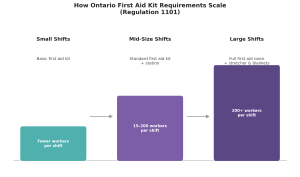
- Match your kit to the correct tier. Regulation 1101 sets out distinct kit levels depending on shift size, generally scaling from a basic kit for smaller shifts up to a fully-equipped first aid room for larger workplaces.
- Confirm accessibility. First aid stations must be positioned so a trained first aider can reach any injured worker within approximately two minutes, and the kit itself must never be locked or obstructed.
- Check the box condition. The kit must be clean, dry, close securely, and be large enough that every item is clearly visible and easy to reach.
- Post required signage. This includes valid first aid certificates near the station and the WSIB “In Case of Injury” poster (Form 82) displayed prominently.
- Schedule quarterly inspections. Regulation 1101 requires a minimum of four inspections per year, with an inspection card kept alongside the kit.
Legal First Aid Kit Contents: What’s Actually Inside
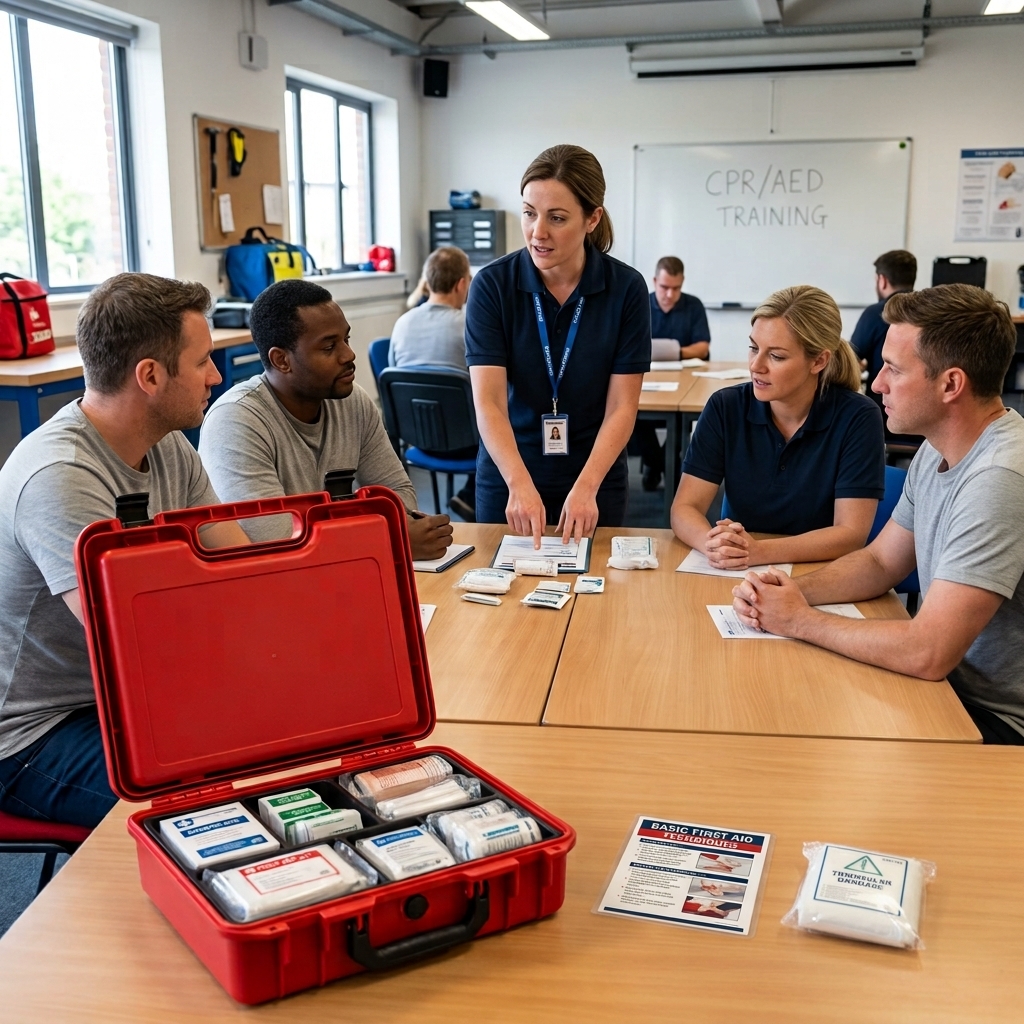
So what do the legal first aid kit contents for a standard Ontario workplace kit actually include? A typical mid-sized kit (for workplaces with more than 15 and fewer than 200 workers per shift) must contain, at minimum:
· A current edition of a standard first aid manual
· 24 safety pins
· 1 stainless steel basin
· 48 individually wrapped adhesive dressings
· 2 rolls of 1-inch adhesive tape
· 12 rolls of 1-inch gauze bandage
· 48 sterile gauze pads (3 inches square)
Additional dressings, bandages, and supplies scaled to workplace size
Smaller and larger workplaces follow adjusted quantities and additional equipment, larger sites may also require a stretcher, blankets, and in some cases a dedicated first aid room staffed by a Registered Nurse or Standard First Aid certified worker.
First Aid Box Requirements Regulation 1101: Common Mistakes
When reviewing first aid box requirements Regulation 1101 sets out, a few mistakes come up again and again:
- Using total employee count instead of workers per shift, which can lead to under-stocking a kit for a busy shift or over-investing for a quiet one.
- Letting supplies expire unnoticed, since expired dressings, antiseptics, or other time-sensitive items don’t meet the “maintained in good condition” standard.
- Locking the kit “for safekeeping,” which directly violates accessibility requirements.
- Skipping inspection documentation, even when the kit itself is properly stocked, missing inspection records can still result in a compliance gap.
Verifying Current Requirements
Because kit specifications and acceptable standards can be updated over time, it’s worth confirming details directly against the source. You can review the full text of Regulation 1101 via the Government of Ontario’s e-Laws , and St. John Ambulance Canada also maintains helpful, plain-language guidance on CSA-compliant kit contents via their First Aid Kit Regulations .
Staying Compliant Without the Guesswork
Getting your first aid kit right is just one piece of a broader compliance picture that also includes certified staff, signage, and documentation. Canadian HSE, based in Kitchener, helps Ontario businesses understand exactly what Regulation 1101 requires, pairing WSIB-approved training with practical guidance on keeping your workplace genuinely compliant.
Ready to make sure your workplace is fully covered? Explore compliance resources and training with Canadian HSE in Kitchener, or contact us with questions about your specific workplace requirements.