
Choking doesn’t give you much time to think. A blocked airway can cut off oxygen to the brain in minutes, and permanent damage can begin in as little as four minutes without intervention. There’s no pause button, no time to look up a video, no room for hesitation. That’s exactly why knowing choking first aid steps before you ever need them matters so much. This guide walks through exactly what to do if someone is choking, whether it’s an adult, a child, or an infant, so you’re ready to act the moment it counts.
Recognizing the Signs of Choking: Mild vs. Severe Obstruction
Not every choking episode looks the same, and knowing the difference between mild and severe obstruction determines how you respond.
Mild obstruction signs include:
- Forceful, effective coughing
- Ability to speak, cry, or make sound
- Wheezing or noisy breathing between coughs
If someone shows these signs, encourage them to keep coughing. Coughing is the body’s most effective way of clearing a partial blockage on its own, and it should not be interrupted with back blows or abdominal thrusts.
Severe obstruction signs include:
- One or both hands clutched to the throat
- Inability to cough, speak, cry, or breathe
- A weak, ineffective cough or high-pitched squeaking sound
- Skin, lips, or nails turning blue or gray
- A look of panic, shock, or confusion
If you see these signs, it’s time to act immediately using the techniques below.
Step-by-Step Response for Adults
When an adult or child over the age of one is severely choking, follow this sequence:
- Confirm severe choking and get consent. Ask “Are you choking?” If they can’t respond, or nod in distress, begin care immediately.
- Have someone call 911 while you begin first aid, or call yourself if you’re alone.
- Give 5 back blows. Stand slightly behind and to the side of the person, support their chest with one arm, bend them forward at the waist, and strike firmly between the shoulder blades with the heel of your hand.
- Give 5 abdominal thrusts. Stand behind the person, find their navel with two fingers, place a fist just above it with the thumb side against their stomach, cover it with your other hand, and pull inward and upward five times.
- Alternate between 5 back blows and 5 abdominal thrusts continuously until the object is dislodged, the person can cough or breathe on their own, or they become unresponsive.
Step-by-Step Response for Infants
Infants under one year old require a different, gentler technique, since abdominal thrusts can injure their smaller, more fragile bodies:
- Position the infant face-down along your forearm, supported by your thigh, with their head lower than their body and your hand supporting their jaw, being careful not to cover their mouth or nose.
- Give 5 firm back blows between the shoulder blades using the heel of your hand.
- Turn the infant face-up, still supported along your forearm with their head lower than their body.
- Give 5 chest thrusts. Place two fingers in the center of the chest, just below the nipple line, and push down about 1.5 inches.
- Continue alternating 5 back blows and 5 chest thrusts until the object is dislodged, the infant can cough or cry, or they become unresponsive.
What to Do If the Person Becomes Unresponsive
If at any point the person stops responding, the situation shifts immediately into CPR territory:
- Carefully lower them to a firm, flat surface.
- Call 911 if it hasn’t been done already.
- Begin CPR, starting with chest compressions, following the technique appropriate for an adult, child, or infant.
- Before giving breaths, check the mouth for a visible object. If you can see it, remove it, but never perform a blind finger sweep on an object you can’t actually see.
- Continue cycles of CPR until the object is expelled, the person starts breathing, or emergency responders arrive and take over.
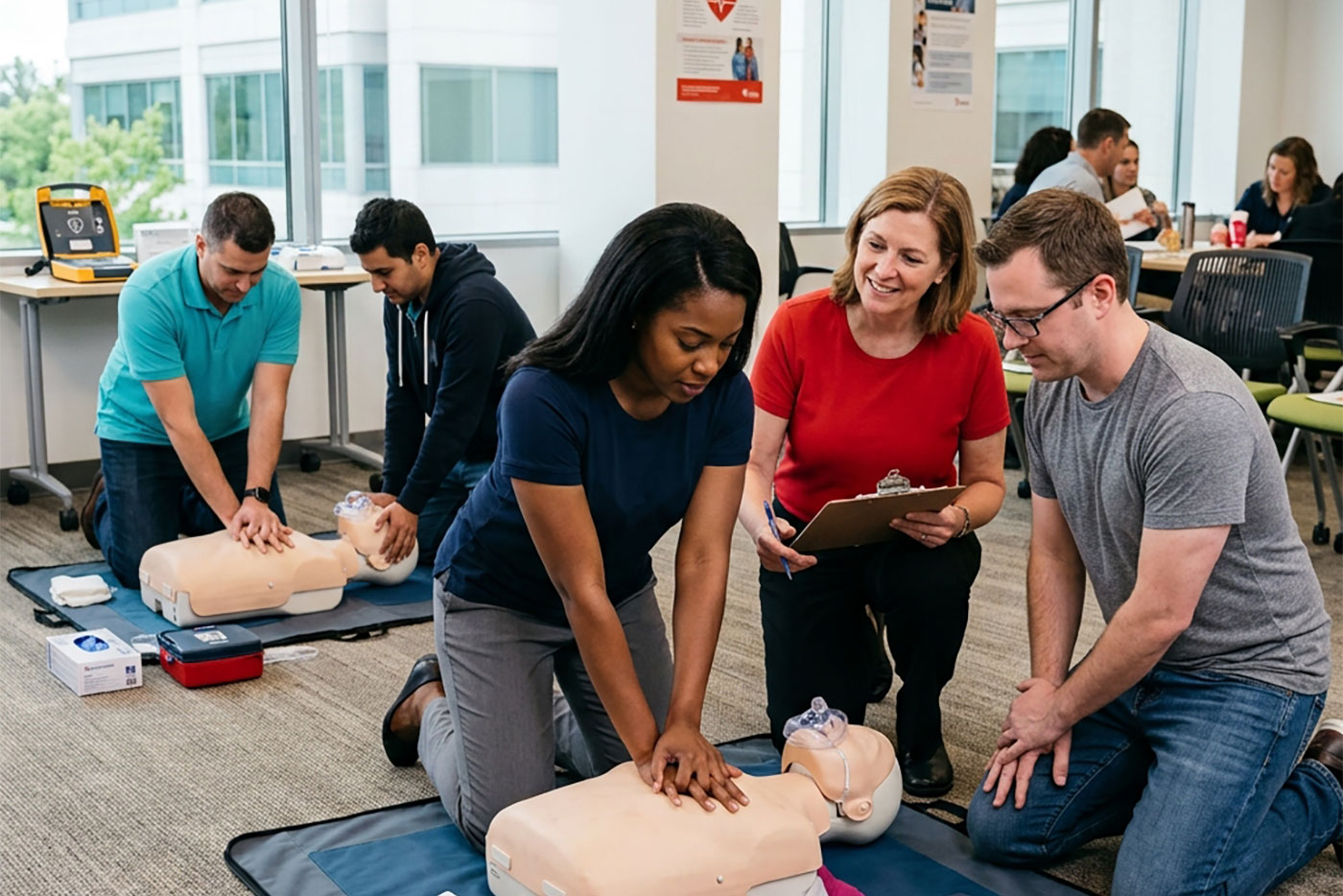
According to the Canadian Red Cross, choking response techniques are taught as a core part of first aid and CPR certification, precisely because these are time-sensitive, hands-on skills that require practiced confidence, not memorized theory. You can review official choking response guidance directly via the Canadian Red Cross first aid
Build Real Confidence with Proper Training
Knowing the steps is one thing; being able to perform them instinctively under pressure is another. Canadian HSE, based in Kitchener, offers hands-on first aid and CPR certification courses that include real practice with choking response techniques for adults, children, and infants.
Ready to build genuine confidence for a choking emergency? Explore first aid and CPR training with Canadian HSE in Kitchener today.