
Why Pet First Aid Matters
Pets get hurt without warning. A dog cuts a paw on a walk, or a cat swallows something unsafe. However, the nearest vet may be minutes away. Those minutes matter. Therefore, Canadian pet owners benefit from knowing basic first aid. Seasonal risks add urgency across Canada. For example, frostbite, heatstroke, and antifreeze exposure all threaten pets. Many owners only learn after an emergency happens. Preparing now avoids that costly lesson. Quick, calm action often decides how well a pet recovers.
What Is Pet First Aid?
Pet first aid means giving immediate care to an injured or ill animal. Its goal is to stabilize your pet until a veterinarian takes over. However, it never replaces professional treatment. Instead, it buys time and prevents further harm. It covers bleeding, choking, burns, and heat illness. A Pet First Aid Course in Canada teaches these skills with hands-on practice. In addition, it shows you how to stay calm under pressure. Owners can learn many of these skills in a short course.
Common Emergencies Involving Dogs and Cats
Dogs and cats face similar dangers at home and outdoors. For example, common emergencies include cuts, choking, burns, poisoning, bites, and heatstroke. Dogs are especially prone to overheating because they cannot sweat like humans. Meanwhile, curious cats often swallow string, plants, or small objects. Poisoning often happens at home, from foods and cleaning products. Moreover, falls and traffic accidents cause serious trauma in both species. Therefore, knowing the risks helps you prevent many emergencies.
How to Recognize Signs of Distress
Dogs often show pain openly. However, cats usually hide it until a problem becomes serious. Therefore, watch your pet’s normal habits closely. Changes in appetite, energy, or bathroom routine can signal trouble. Early recognition gives your vet a head start. Recognize these warning signs early:
- Breathing changes: rapid, noisy, or labored breathing.
- Gum color: pale, white, or blue-tinged gums.
- Choking signs: gagging, pawing at the mouth, or retching without result.
- Collapse or weakness: trouble standing or sudden lethargy.
- Behavior shifts: hiding, crying out, or unusual aggression.
Essential Items for a Pet First Aid Kit
A well-stocked kit saves precious time. Keep it in a clearly marked, waterproof container. Also, store it where everyone can reach it quickly. Essential items include absorbent gauze pads, adhesive tape, self-adhesive bandage wrap, and non-stick dressings. Additionally, pack blunt-tipped scissors, tweezers, a digital thermometer, saline solution, and a clean towel. Include a card with your vet’s number and the nearest emergency clinic. Finally, add a poison control hotline number. Review the contents twice a year and replace anything used or expired. Choose supplies that suit your pet’s size and species. Never add human painkillers, because many are toxic to pets.
Basic First Aid Steps for Common Pet Injuries
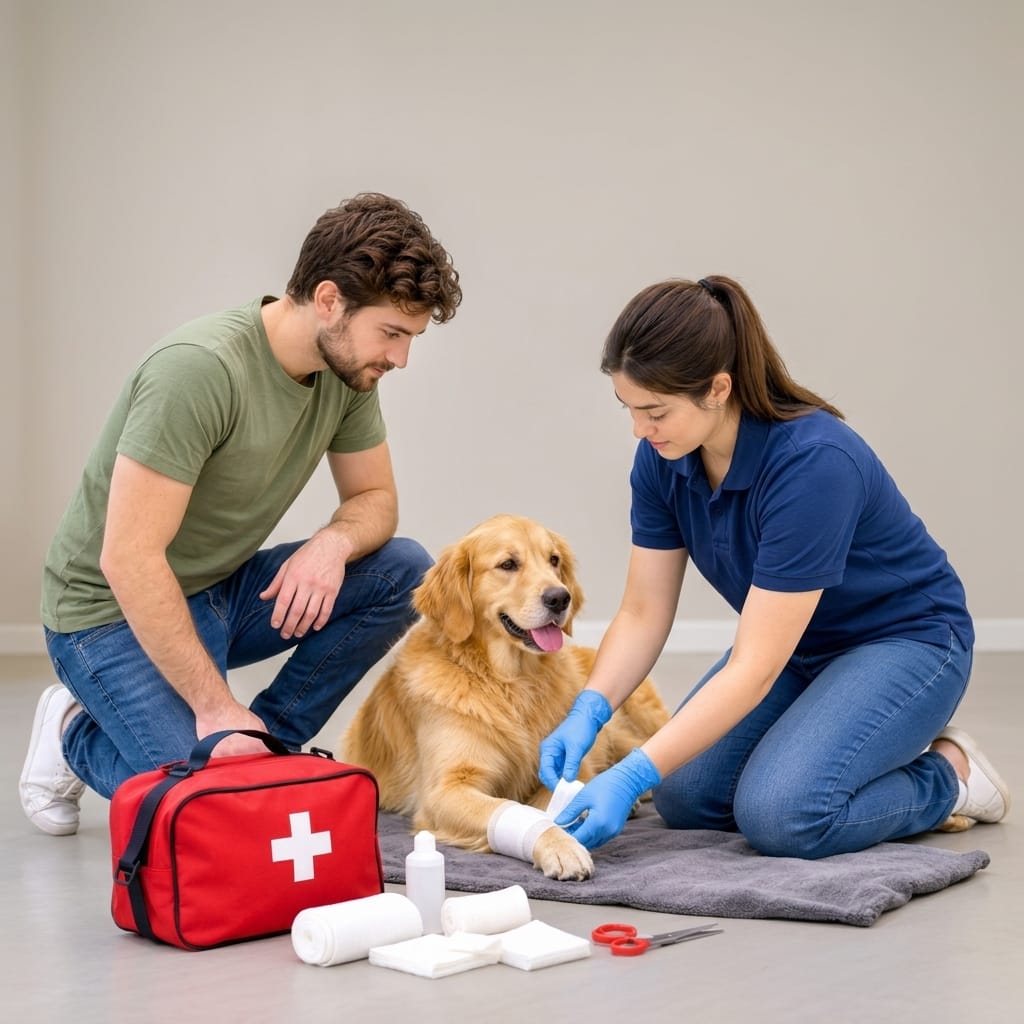
Injured animals may bite out of fear. Therefore, approach slowly and speak softly. Different injuries need different responses, so ask your vet before using any ointment. Use this routine for a bleeding wound:
- First, stay calm and protect yourself from bites or scratches.
- Next, call your vet or emergency clinic so the team can prepare.
- Then, press clean gauze firmly on the wound.
- Add more gauze on top instead of removing soaked pads.
- Finally, keep your pet warm and still, and travel to the clinic.
Remember that first aid is only the first step.
When to Contact a Veterinarian
Call a veterinarian immediately for severe bleeding, breathing trouble, seizures, collapse, suspected poisoning, or heatstroke. In addition, contact your vet after any first aid you perform. Because pets hide pain, trust your instincts and call early. If you suspect your pet ate something harmful, call a poison hotline right away. Always keep your vet’s number and an emergency clinic’s address handy. The Canadian Red Cross pet emergency guide explains how to prepare with a pet first aid kit and basic skills
Common Mistakes Pet Owners Should Avoid
Common mistakes can make emergencies worse. For instance, owners often give human medications, which can be dangerous or even fatal. Others induce vomiting without advice, although some methods are unsafe for cats. Similarly, tight bandages can cut off circulation. Waiting too long to seek help is another costly error. Panic also leads to rushed, poor decisions.
Benefits of Learning Professional Pet First Aid
Reading helps, but practice builds real skill. Pet First Aid Training lets you rehearse bandaging, restraint, and pet CPR on models with expert feedback. Therefore, you learn correct technique before a crisis, not during one. Moreover, trained owners recognize problems sooner and communicate clearly with veterinarians. A good course also teaches you how to check normal vital signs. Practice also reduces panic, which helps your pet stay calmer. In addition, families, dog walkers, and pet sitters gain confidence together.
Conclusion and Call to Action
Whether you own a dog, a cat, or both, preparation brings peace of mind. Take the first step by booking training and stocking your kit this week. Canadian HSE offers first aid training in Kitchener. Contact us to ask about pet first aid course options for your needs. Small preparations today can protect the animals you love tomorrow