
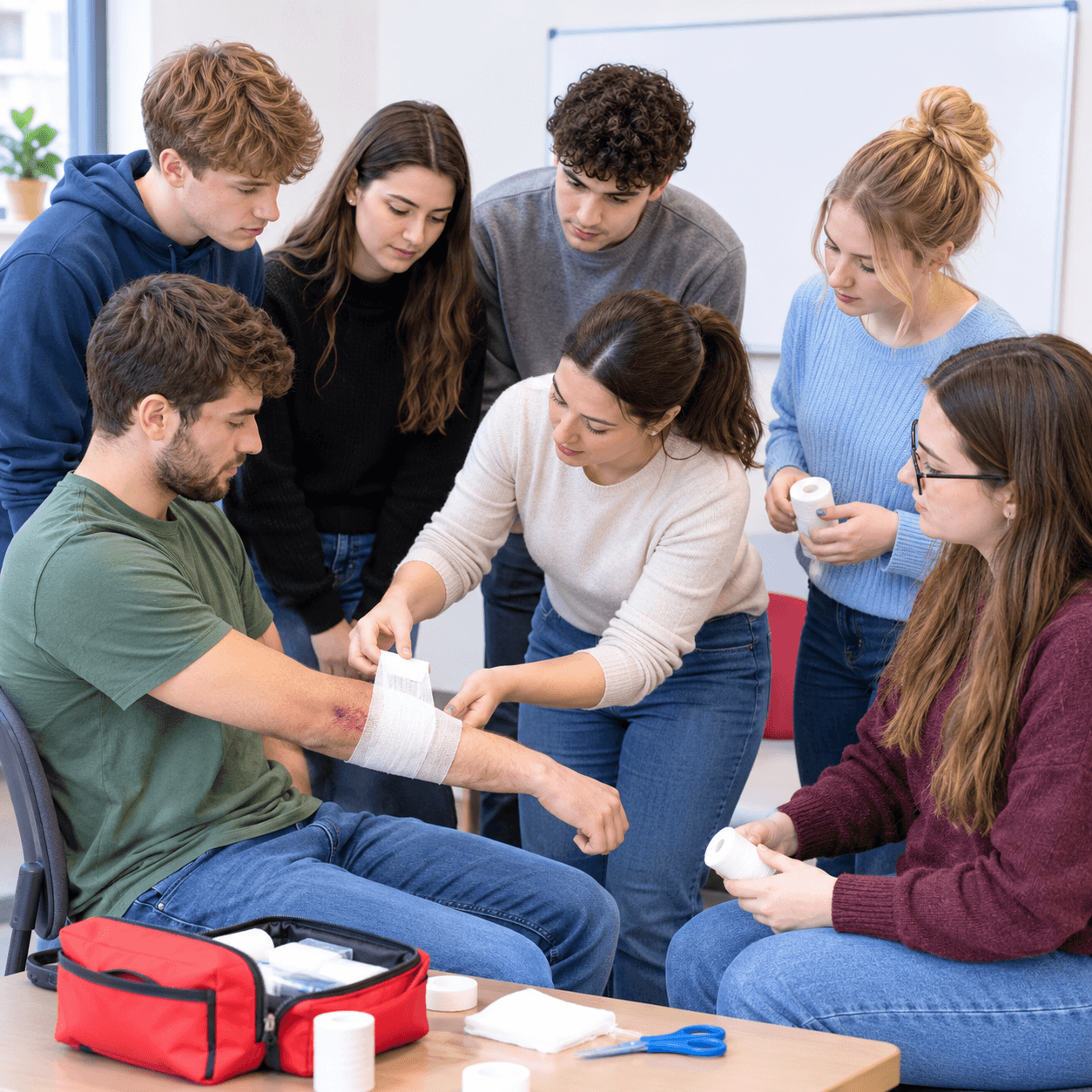
Emergencies rarely announce themselves. A parent chokes at dinner, or a colleague collapses in a meeting. However, help may take minutes to arrive. As a result, those minutes decide many outcomes. Essential Lifesaving Skills let ordinary people act while paramedics travel. Moreover, you do not need a medical background to learn them. Therefore, the best time to train is before an emergency happens. This guide covers the key skills, a simple action plan, and where to learn them. Many people assume only professionals can help. However, ordinary bystanders save lives every day. Confidence is the missing ingredient. Training provides it.
The Numbers behind the Urgency
The Heart & Stroke Foundation reports about 60,000 cardiac arrests outside hospitals each year in Canada. That is one every nine minutes. Furthermore, most happen at home, so family members are often the first res ponders. In addition, brain injury can begin within about five minutes without CPR. However, cardiac arrest is not the same as a heart attack. It is an electrical problem that stops the heart from pumping blood. Moreover, nearly half of cases involve people under 65. Therefore, anyone, at any age, may need help. Consequently, quick action matters.
Five Essential Lifesaving Skills
Five skills cover most serious emergencies. Also, each one is simple and takes little time to practice. The pyramid below shows how to build them step by step. Learn these first:
- CPR: chest compression keep blood moving to the brain and heart.
- AED use: the device checks the heart rhythm and guides you with voice prompts.
- Choking relief: back blows and abdominal thrusts clear a blocked airway.
- Bleeding control: firm, direct pressure slows severe bleeding.
- Emergency recognition: you spot stroke, heart attack, and severe allergic reactions early.
Together, these skills form a strong foundation. Moreover, they apply at home, at work, and in public. Besides, parents, coaches, and colleagues use those most often. Additionally, they carry over to nearly every other first aid topic.
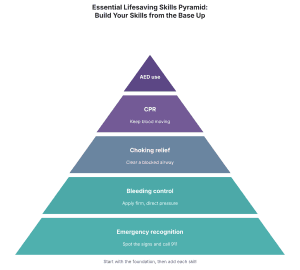
Pyramid chart of five essential lifesaving skills, built from the base up: emergency recognition, bleeding control, choking relief, CPR, and AED use
A Simple Plan for Any Emergency
Skills work best with a clear routine. Because hesitation costs valuable seconds, a routine helps. Heart & Stroke stresses that you cannot hurt someone by giving CPR. Therefore, do not let fear stop you. Remember these steps:
- First, check that the scene is safe.
- Next, call 911 or send someone to call.
- Then, start CPR or other care and ask for an AED.
- Finally, stay with the person until help arrives.
Calling early saves time. Dispatchers can also guide you through the first steps. Stay calm, speak clearly, and follow their instructions. Meanwhile, practice turns these steps into habit.
Learn Before You Need It
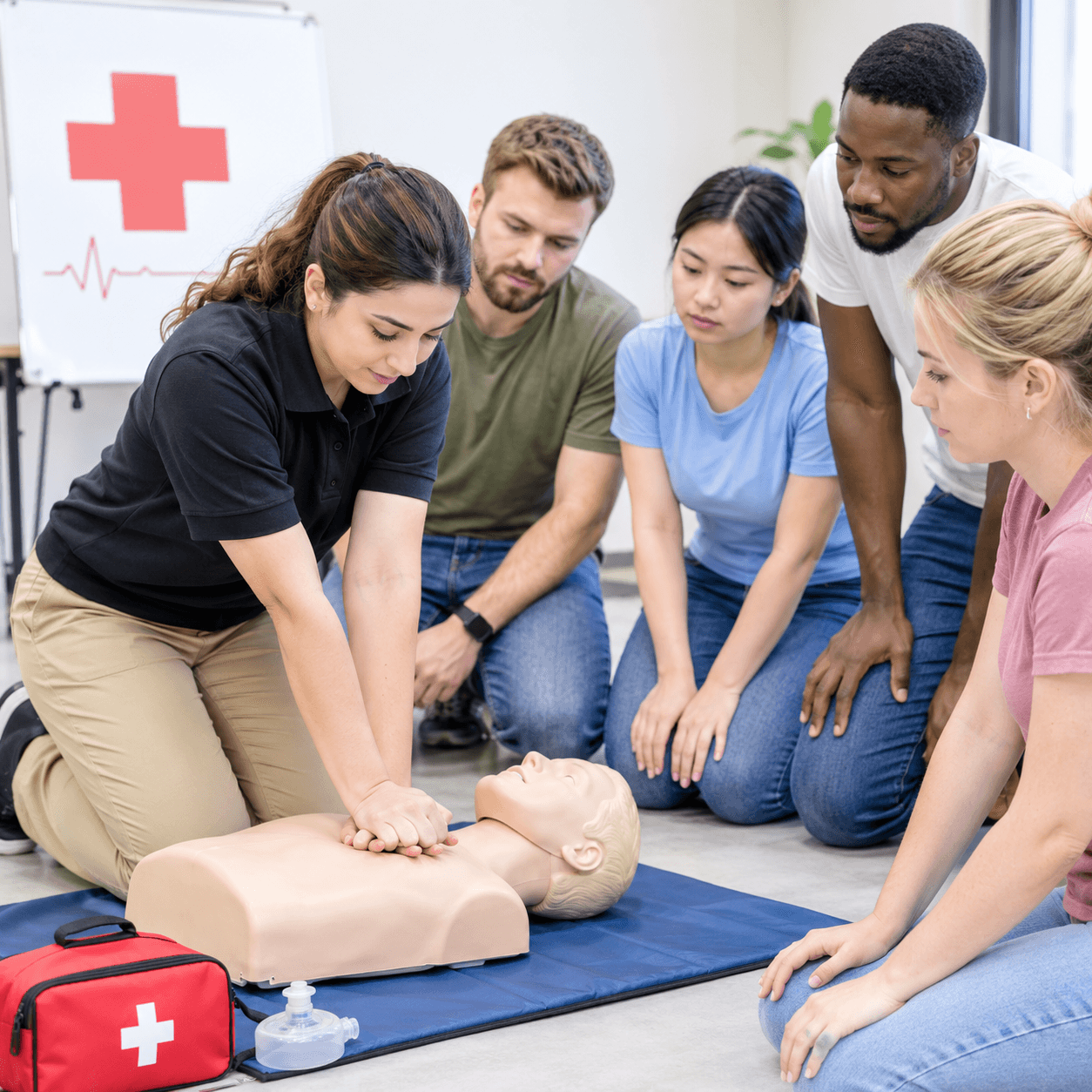
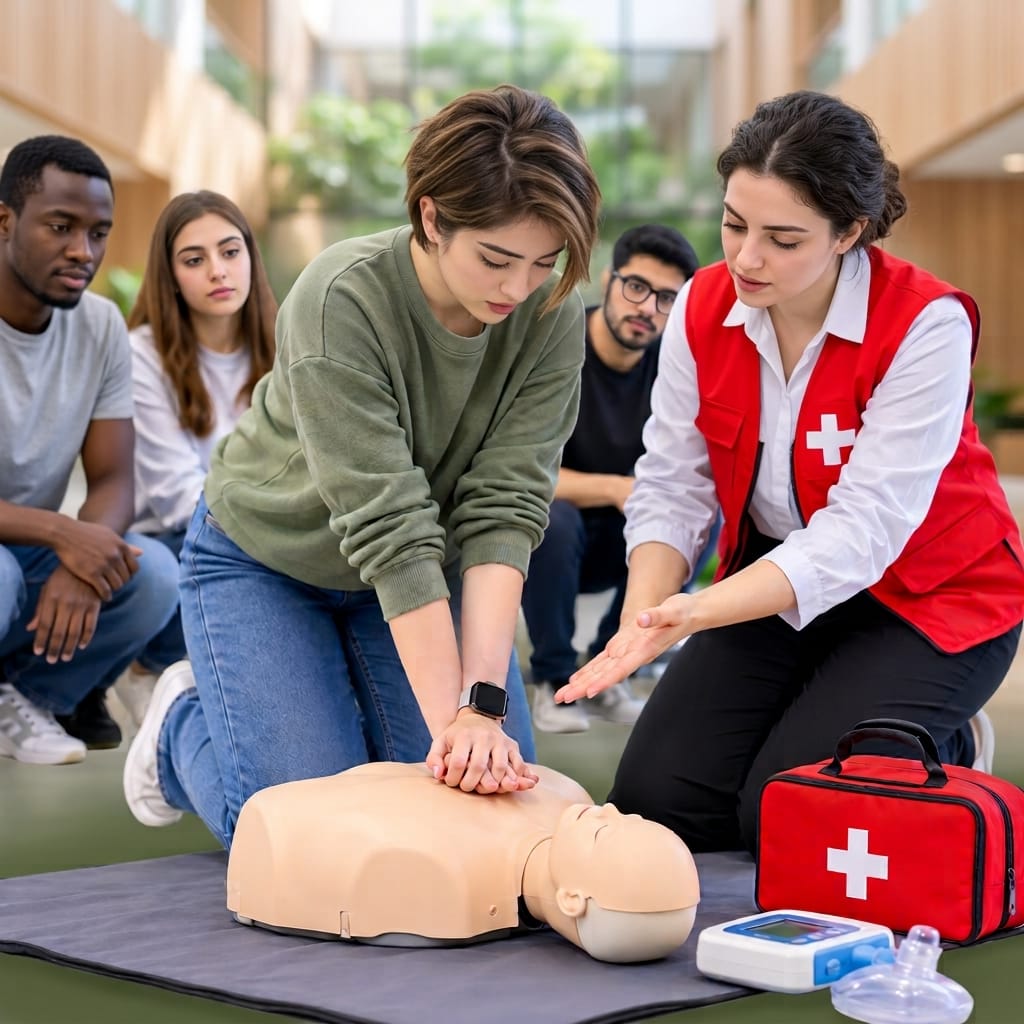
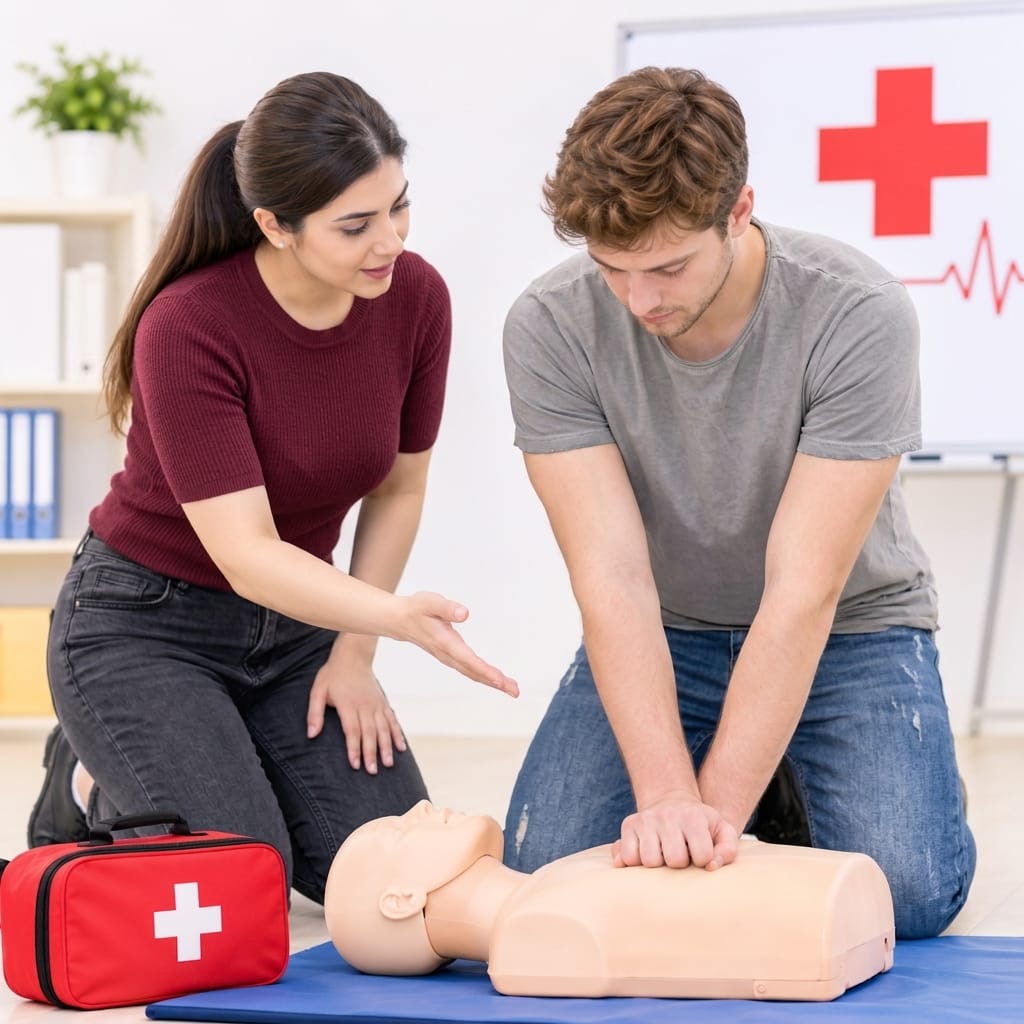
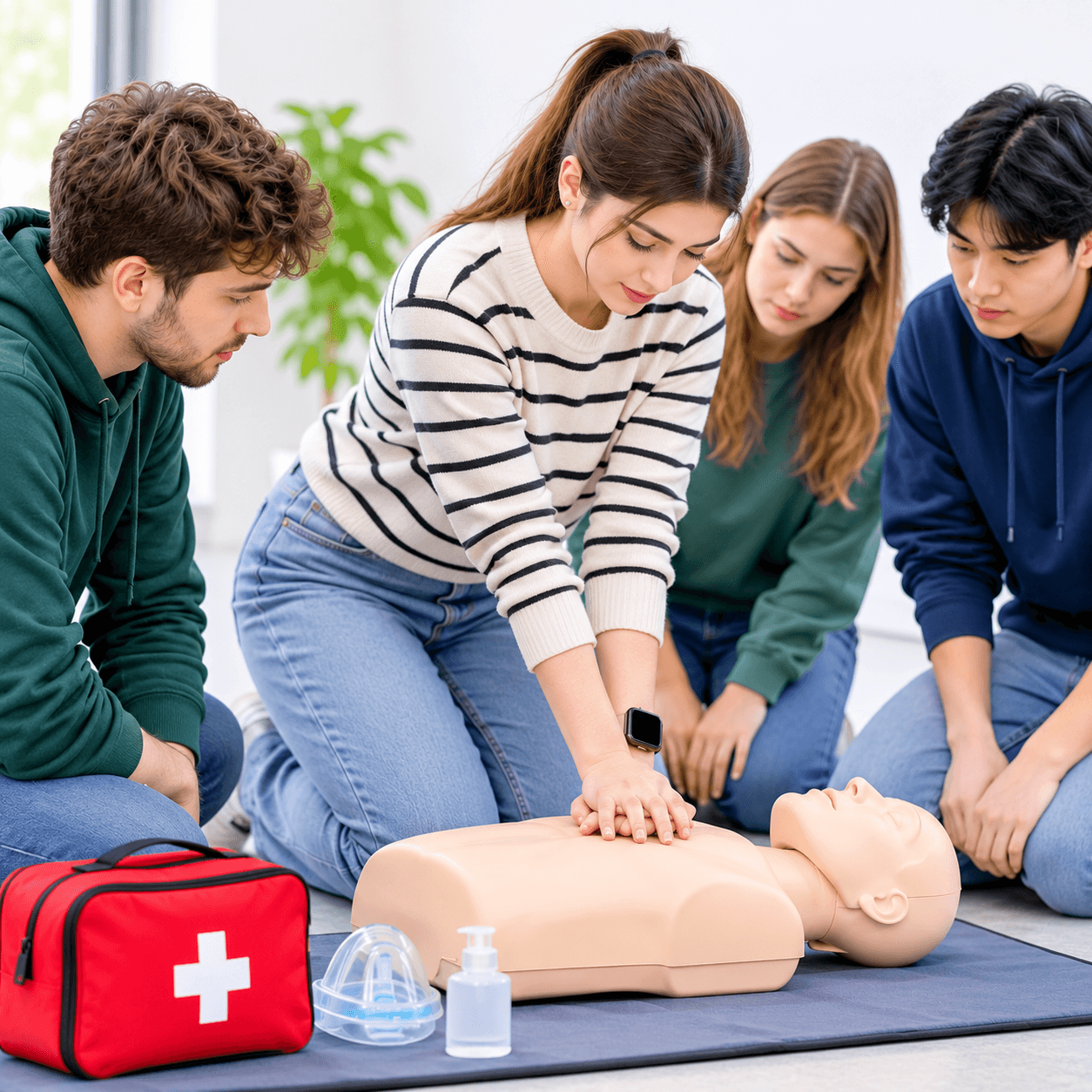
Reading helps, but practice builds confidence. Courses let you rehearse compression, AED use, and choking relief on manikins. Moreover, instructors correct your technique right away. The Heart & Stroke news release explains why bystander action improves survival. Meanwhile, the Canadian Red Cross Basic/Emergency First Aid & CPR page outlines what a certified course covers. Certificates generally last three years. Skills fade without practice, so refresh them regularly. In addition, short courses fit most schedules. Many providers also offer blended options with online lessons and in-class practice. Also, group bookings suit families, teams, and community clubs. Choose a provider that offers hands-on practice, clear feedback, and recognized certification.
Start Training Today
Canadian HSE offers first aid and CPR training in Kitchener. Its courses focus on Essential Lifesaving Skills for real situations. Additionally, instructors explain each step clearly and coach you through practice. As a result, you leave ready to act. Whether you train alone or with a team, you gain skills that last. Every trained person strengthens the whole community. Small actions today create confident helpers tomorrow. Contact us to find the right course for you or your team. You can also explore options with Canadian HSE today.