
Healthcare workers don’t have the luxury of basic first aid knowledge; they’re expected to respond with clinical precision, often as part of a coordinated team, in situations where seconds genuinely determine outcomes. That’s exactly why First Aid Training for Healthcare Professionals looks fundamentally different from a general public course. It’s more intensive, more team-focused, and held to a far higher standard of ongoing renewal.
First Aid Training for Healthcare Professionals Certification 2026
One of the biggest shifts to understand in 2026 involves terminology and standards. First aid training healthcare professional’s certification 2026 requirements now center on Basic Life Support (BLS), which has fully replaced the older CPR-HCP (Healthcare Provider) designation. This isn’t just a rebrand; BLS reflects updated resuscitation science and a more rigorous, team-based approach to emergency response. Key features of current BLS certification include:
- No prerequisites required, though it’s designed specifically for those with a professional duty to respond.
- A minimum 75 percent score on a closed-book written knowledge evaluation.
- Full demonstration of all practical skill competencies, assessed hands-on by a certified instructor.
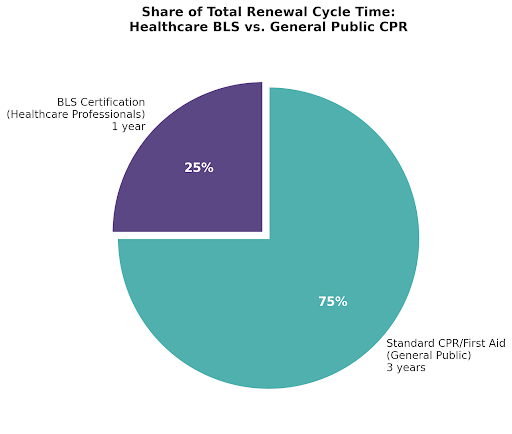
- One-year certification validity, notably shorter than the standard three-year cycle for general public first aid courses.
Advanced First Aid Courses Medical Staff Online
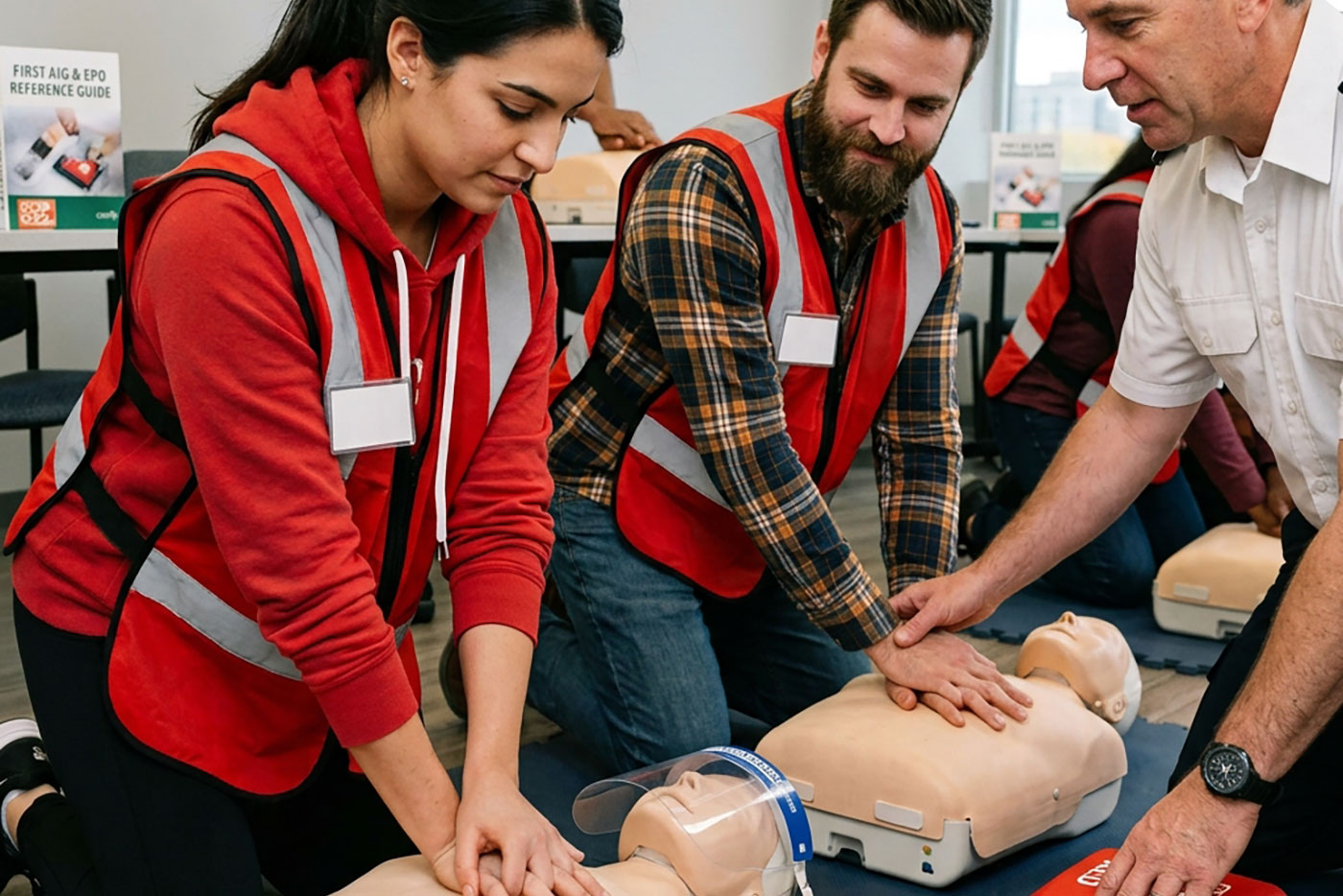
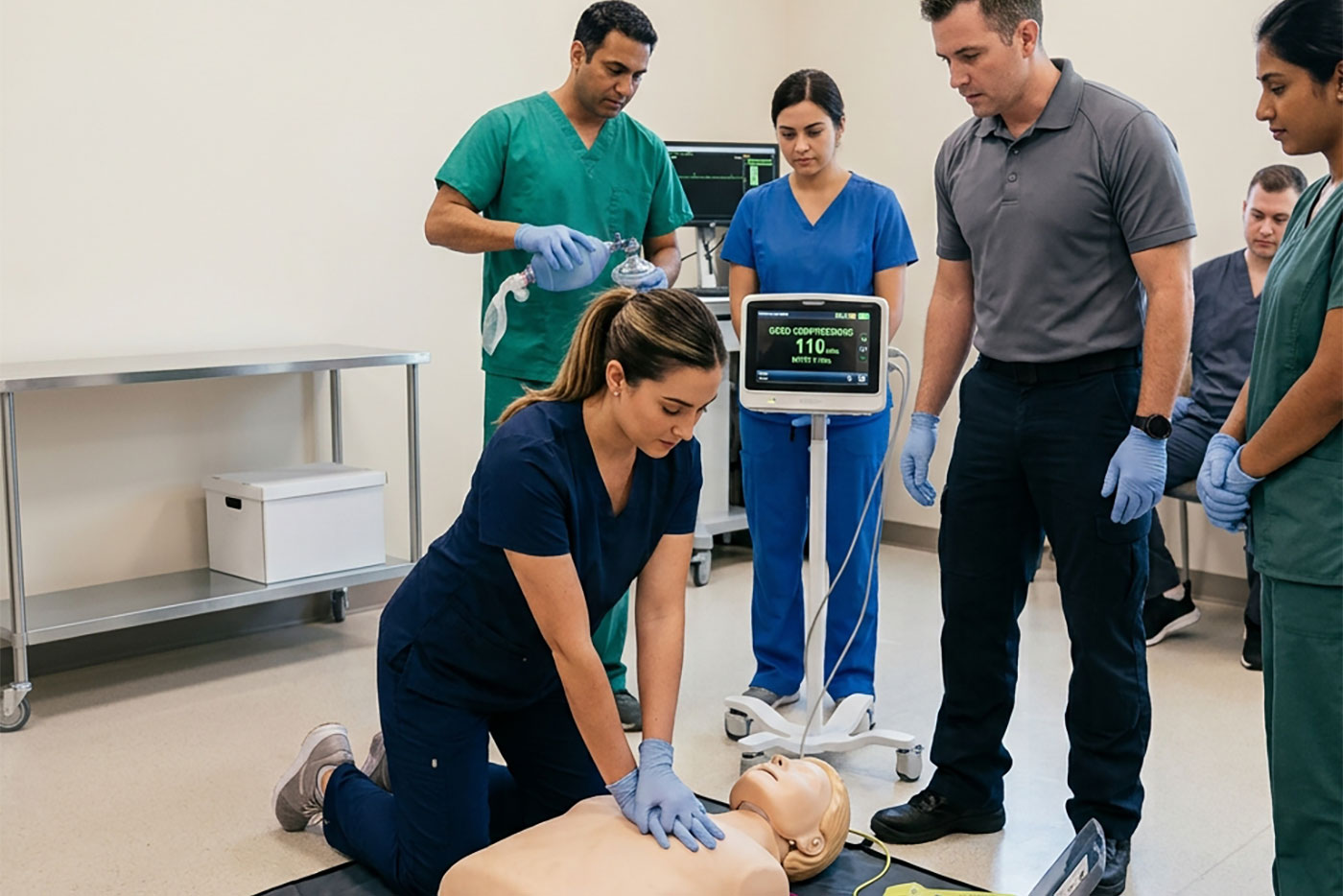
When researching advanced first aid courses medical staff online, it’s important to understand what can and can’t be completed remotely. Some preparatory theory content may be available online, but the core of BLS training- high-performance CPR, two-rescuer coordination, bag-valve-mask ventilation, and AED integration- requires in-person, hands-on practice. These are physical, team-based skills that simply can’t be assessed through a screen, which is why every legitimate BLS program runs as an in-person session with a certified instructor.
What Makes BLS Different From Standard CPR
Healthcare-level training goes well beyond what’s taught in a general public CPR course. While standard CPR/AED training covers single-rescuer CPR, basic AED use, and choking response, BLS adds:
- Two-rescuer CPR, coordinating compressions and ventilation with a partner in real time.
- High-performance team dynamics, ensuring clear roles and communication during resuscitation.
- Advanced airway management, including bag-valve-mask ventilation.
- Broader clinical scenarios, covering not just cardiac arrest but also opioid overdose, anaphylaxis, trauma, and hypothermia response.
Best First Aid Training Programs for Doctors, Nurses: Reviews
When comparing best first aid training programs for doctors nurses reviews, look past general star ratings and focus on specifics: Are instructors current healthcare professionals themselves? Is the hands-on practice time substantial, not just a token skills check? Does the course cover team-based scenarios relevant to a clinical setting, not just individual CPR technique? Programs that genuinely simulate real clinical pressure tend to produce far more confident, capable responders than those that simply check a certification box.
Healthcare First Aid Protocols: Updates and Emergency Response
Staying current with healthcare first aid protocols and emergency response guidelines matters enormously in this field, since resuscitation science evolves as new evidence emerges. This is a core reason BLS certification renews annually rather than every three years: healthcare responders need their skills and knowledge refreshed far more frequently than the general public.
What the Canadian Red Cross Says About BLS Training
The Canadian Red Cross designed BLS specifically for professionals with a duty to respond during emergencies, walking participants through rapid patient assessment, high-performance CPR, and rapid defibrillation using an AED. Their program requires successful demonstration of all skill competencies alongside a minimum 75 percent mark on a written evaluation, ensuring certified professionals are genuinely ready to perform under pressure, not just familiar with the theory. You can review official course details via the Canadian Red Cross Basic Life Support course page.
Certification Renewal: A Yearly Commitment
Here’s a simple breakdown of how the one-year certification cycle typically works for healthcare responders.
Getting Certified or Renewed
Whether you’re pursuing BLS certification for the first time or need your annual renewal, working with an experienced, Red Cross-aligned provider makes the process straightforward. Canadian HSE, based in Kitchener, offers First Aid Training for Healthcare Professionals, including BLS certification and renewal, taught by instructors who understand the real demands of clinical response.
Ready to get certified or renew your BLS training? Explore healthcare-focused courses with Canadian HSE in Kitchener, or contact us to find the right training path for your role.