
Here’s something most people don’t realize: you don’t need to be a paramedic, nurse, or doctor to save a life with a defibrillator. AEDs were specifically engineered for ordinary people to use in the middle of an emergency, no medical training required. That matters more than most of us think. In Canada, an estimated 60,000 cardiac arrests happen outside of hospitals every year, roughly one every nine minutes, and only about one in ten people survive. But when someone nearby acts fast with CPR and an AED, that survival chance can double. This guide walks through exactly how to use an AED steps in Ontario, so if that moment ever comes, you’re not standing there frozen; you’re already moving.
What Is an AED and How Does It Work
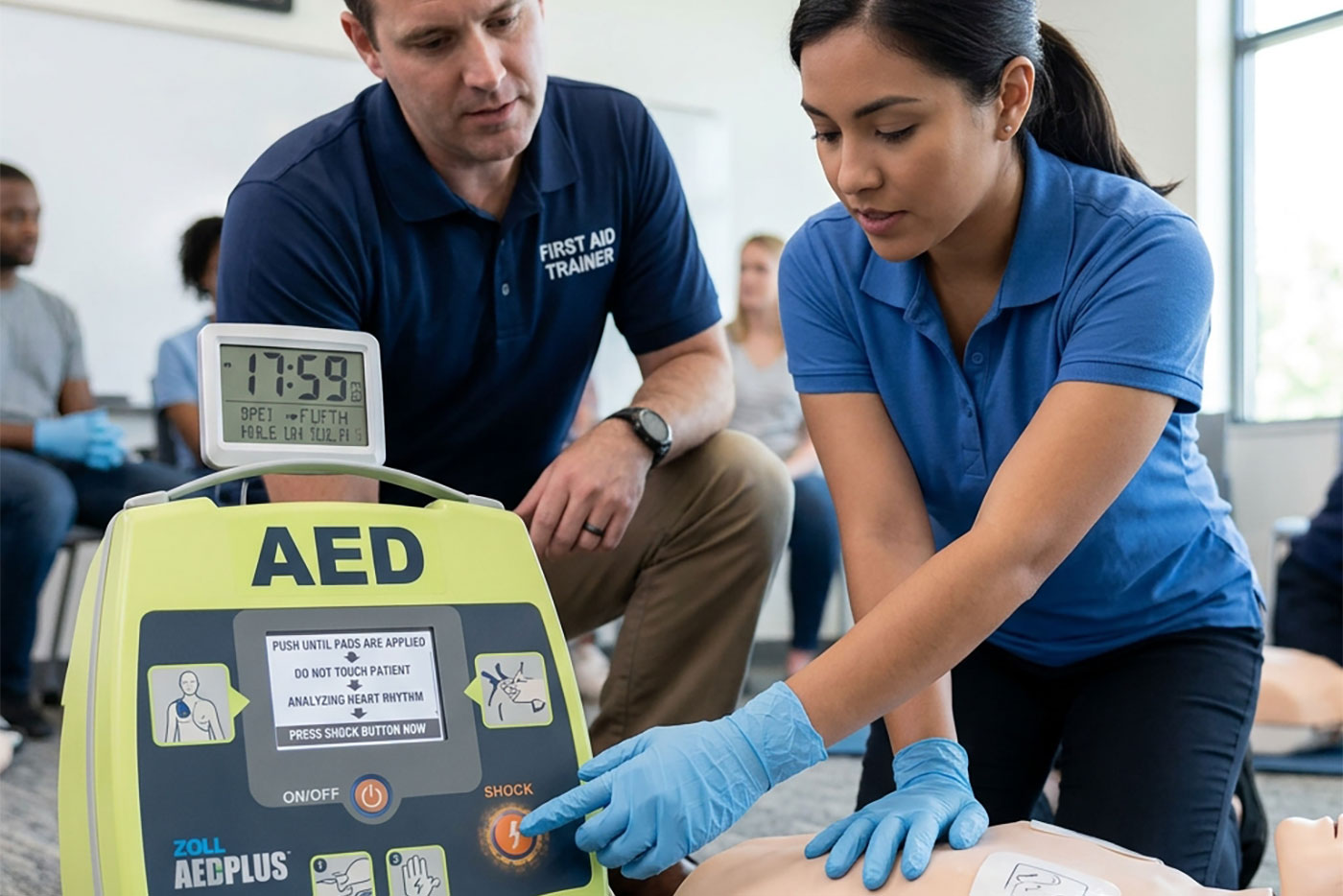
An AED, or automated external defibrillator, is a portable device designed to check a person’s heart rhythm and deliver an electric shock if needed to help restore a normal heartbeat. What makes AEDs so approachable for non-medical users is their built-in intelligence: the device analyzes the heart rhythm on its own and advises a shock only if one is required. It won’t shock someone whose heart doesn’t need it. Combined with voice prompts and simple visual instructions, AEDs are built from the ground up for bystanders, not just clinicians.
AED Steps Ontario: Using an AED in an Emergency
When someone collapses and isn’t breathing normally, every second counts. Here are the core AED steps Ontario responders and bystanders alike are trained to follow:
- Call for help first. Call 911 or have someone else call immediately, and ask someone to bring the nearest AED while you begin CPR.
- Power on the AED. Open the lid or press the power button. The device will immediately begin giving voice prompts and visual instructions to guide you.
- Expose the chest and place the pads. Attach the AED pads to the person’s bare, dry chest exactly as shown in the illustration on the pads themselves, one below the right collarbone and one on the lower left side of the chest.
- Ensure no one is touching the person. Before the AED analyzes the heart rhythm or delivers a shock, clearly say “clear” and visually confirm no one is in contact with the person.
- Deliver the shock if advised. If the AED detects a shakable rhythm, it will instruct you to press the shock button, or in some models, deliver the shock automatically.
- Resume CPR immediately. After the shock (or if no shock is advised), begin or continue CPR right away, following the AED’s prompts, until paramedics arrive and take over.
Common Mistakes People Make With AEDs
Even with clear voice prompts, a few common errors can slow down or complicate the process:
- Hesitating out of fear of “doing it wrong.” AEDs are designed to guide you through every step, hesitation costs far more than a small mistake ever would.
- Placing pads over clothing, jewelry, or wet skin. The chest needs to be bare and dry for the pads to work effectively; quickly wipe away moisture if needed.
- Stopping CPR too early. Many people stop compressions the moment the AED is attached, but CPR should continue whenever the device isn’t actively analyzing or shocking.
- Forgetting to say “clear.” Skipping this step risks injury to anyone still touching the person during analysis or shock delivery.
- Assuming a shock wasn’t needed means nothing else should be done. Even without a shock advised, CPR must continue immediately.
AEDs and CPR: Why They Work Together, Not Separately
AEDs and CPR aren’t alternatives to each other; they’re partners. CPR keeps oxygenated blood circulating to the brain and vital organs, buying critical time, while the AED works to correct the underlying heart rhythm that’s causing the cardiac arrest in the first place. Using one without the other significantly reduces the chance of a positive outcome. This is exactly why CPR and AED training are almost always taught together in a single course; they’re designed to be used as a combined response, not isolated skills.
Where AEDs Are Typically Found in Ontario Workplaces
Many Ontario workplaces, particularly larger offices, gyms, schools, arenas, and shopping centers, keep AEDs mounted in clearly marked, accessible locations such as near reception areas, stairwells, or break rooms. Some municipalities and employers also register their AEDs with local emergency medical services so 911 dispatchers can direct callers to the nearest device during an emergency. If you’re not sure where your workplace’s AED is located, it’s worth finding out today, not in the middle of a crisis.
What Wikipedia Says About AED History
The idea of a defibrillator anyone could use isn’t as recent as it might seem. According to Wikipedia, an automated external defibrillator is a portable electronic device that automatically diagnoses life-threatening cardiac arrhythmias such as ventricular fibrillation and is able to treat them through defibrillation, restoring the heart to an effective rhythm. Wikipedia also notes that the portable version of the defibrillator was invented in the mid-1960s by Frank Partridge in Belfast, Northern Ireland, and the first automatic, public-use defibrillator was produced in the late 1970s under the name Heart-Aid. What started as a specialized medical tool has since evolved into a device specifically engineered, through simple audio and visual prompts, for use by the layperson. You can read more via Wikipedia’s entry on AED
Build Real Confidence with Proper Training
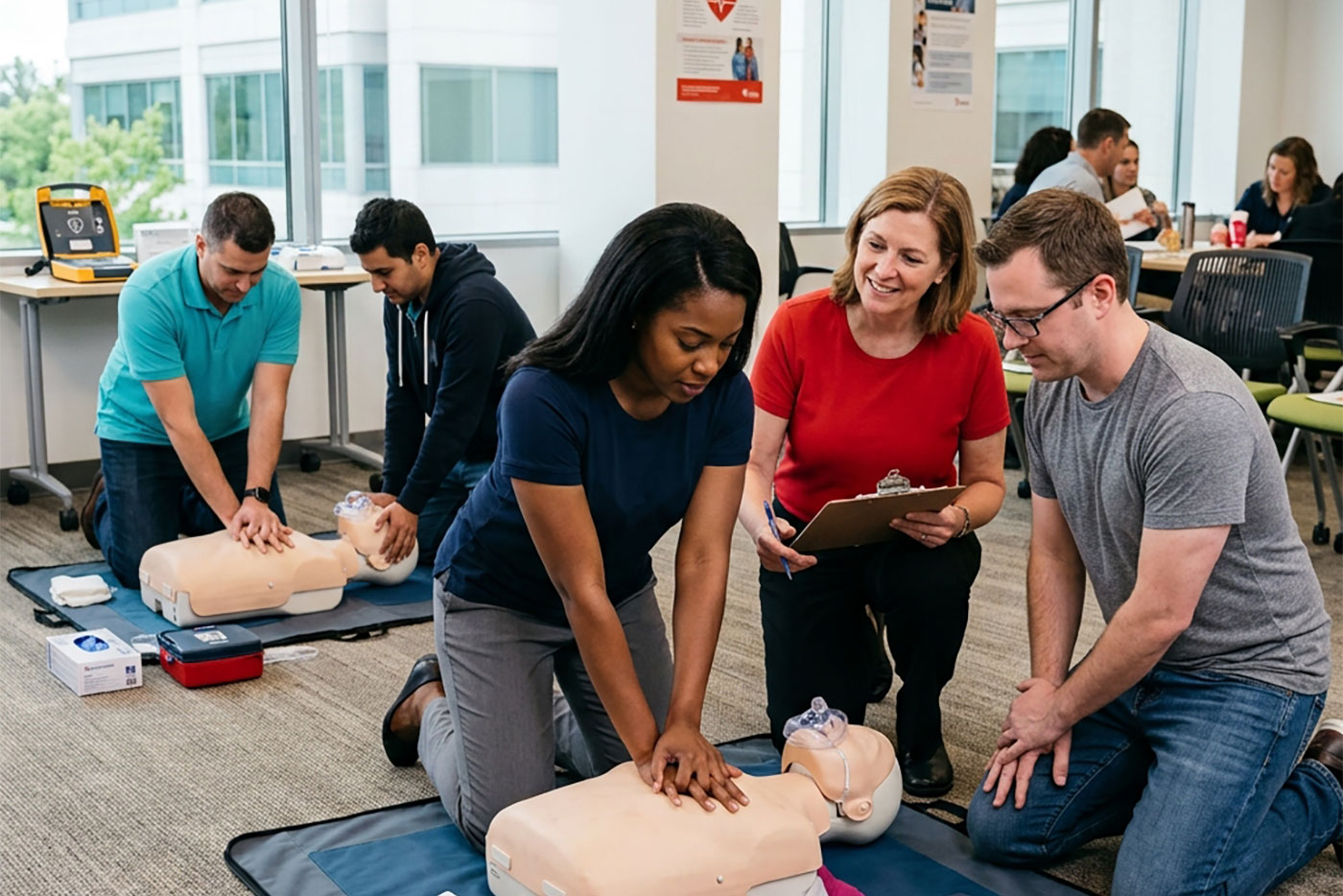
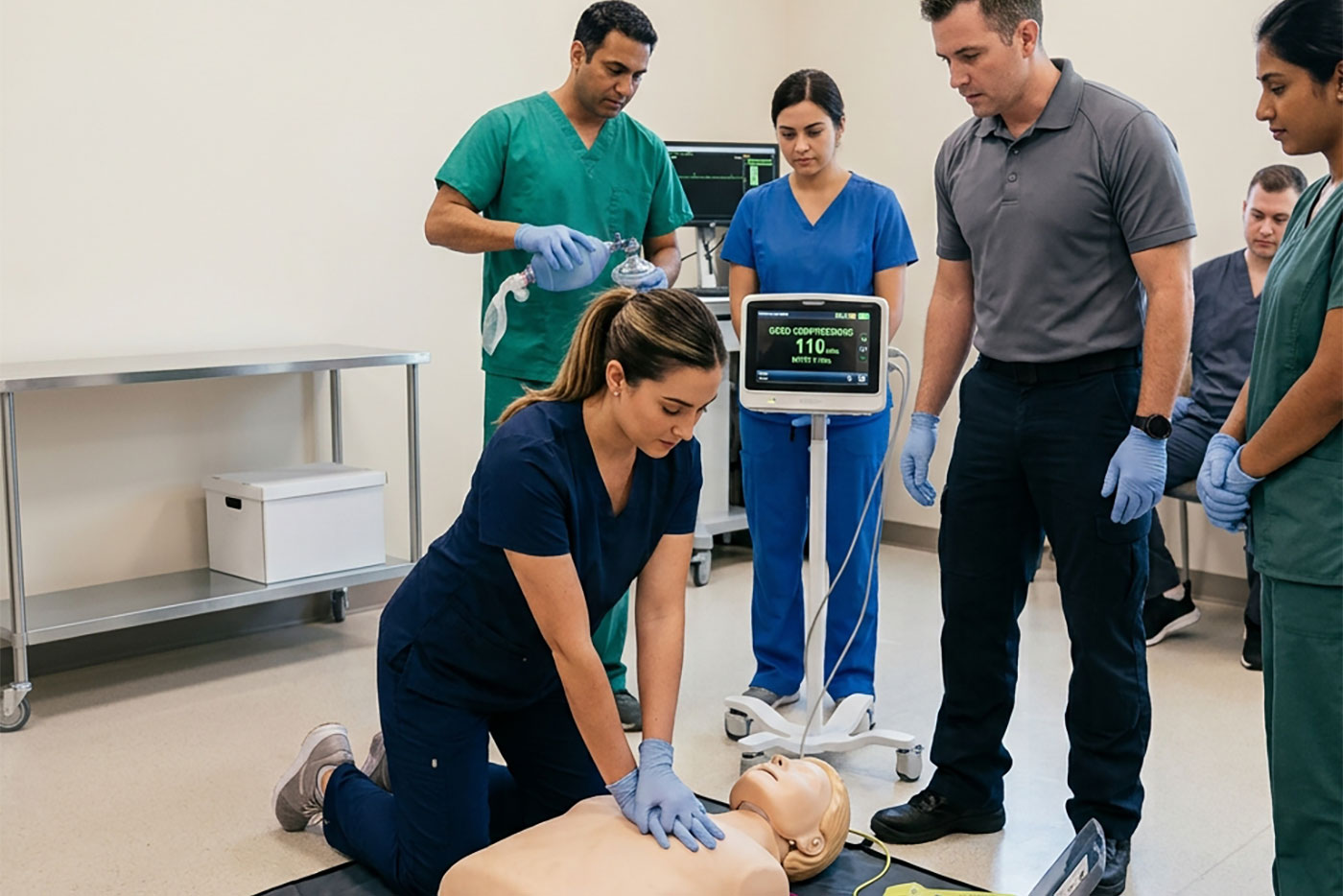
Reading through these steps is a great start, but nothing replaces hands-on practice with a real AED under a certified instructor’s guidance. A combined BLS or CPR-AED course gives you the muscle memory and confidence to act decisively when it matters most, rather than relying on memory alone in a high-stress moment. Canadian HSE, based in Kitchener, offers hands-on BLS and CPR-AED certification courses designed to prepare everyday people, not just healthcare workers, to respond with confidence.
Ready to learn how to use an AED with real hands-on practice? Explore BLS and CPR-AED training with Canadian HSE in Kitchener today.