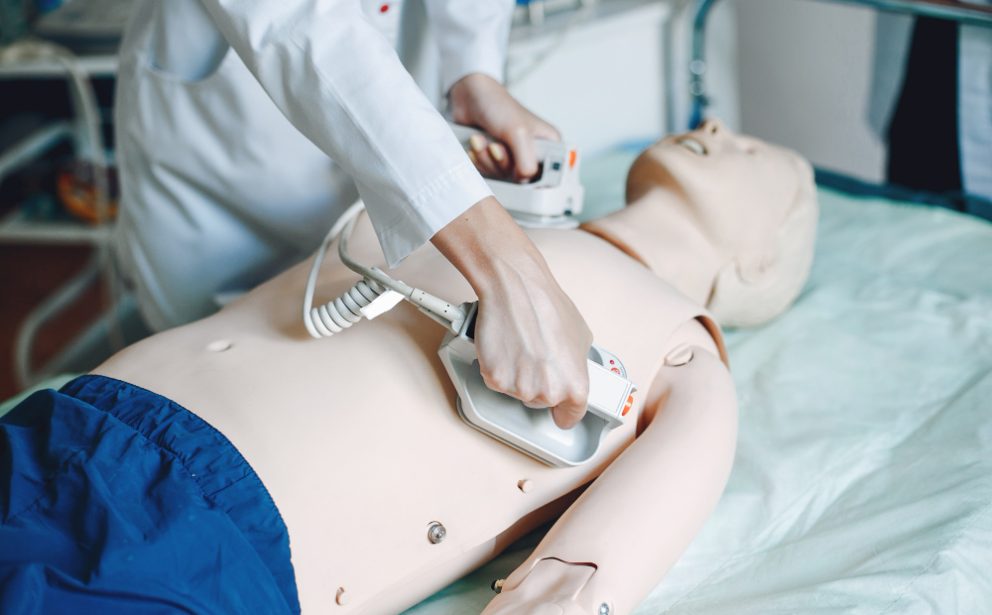
An Automated External Defibrillator (AED) is a life-saving device used when someone is in sudden cardiac arrest—a condition where the heart stops beating effectively. AEDs are designed so that anyone, even with minimal training, can use them confidently. Their clear voice prompts guide you step by step, making fast action possible when every second counts.
- Check the Scene and the Person
Before using an AED, make sure the area is safe.
Tap the person and shout to check for responsiveness. If they do not respond and are not breathing normally, they may be in cardiac arrest.
- Call for Help
Call 911/EMS or have someone nearby do it immediately.
Send someone to get the AED if one is available. Many public places—schools, malls, gyms—have them clearly marked.
- Turn On the AED
Open the device and press the power button if required.
The AED will begin giving voice instructions. Follow them exactly.
- Expose the Chest and Apply the Pads
Remove clothing from the person’s chest.
Peel off the adhesive pads and place them as shown on the diagrams:
- One pad on the upper right chest
- The other is on the lower left side, below the armpit
If the chest is very wet, dry it quickly. If the person has a medication patch or a visible implanted device (like a pacemaker), place the pad a few centimetres away.
- Let the AED Analyze
Ensure no one is touching the person.
The AED will check the heart rhythm automatically.
It will then tell you whether a shock is needed.
- Deliver the Shock (If Advised)
If the AED instructs you to give a shock, loudly say “Clear!” to ensure no one is touching the person.
Press the shock button when prompted.
The device will deliver an electrical pulse to help the heart restart a normal rhythm.
Sometimes AED might say No Shock Advised. Quickly reassess the patient to see if there is any change in the patient’s condition.
- Resume CPR
Immediately begin CPR starting with chest compressions, unless the AED tells you otherwise.
Follow the AED’s prompts—some devices will count compressions or tell you when to pause for re-analysis.
- Continue Until Help Arrives
Keep following the AED’s directions and performing CPR until:
- Emergency responders take over
- The person starts breathing normally
- You are physically unable to continue
- The scene becomes unsafe for you.
Why AEDs Matter
AEDs dramatically increase the chances of survival when used quickly—often within the first few minutes of collapse. Their simple, guided design means that any bystander can become a rescuer. Remember, for every single minute delay in the use of an AED, the chances of survival go down by 10%.
If you ever see an AED on a wall, take a moment to notice its location. You could save a life.